NeonMoon
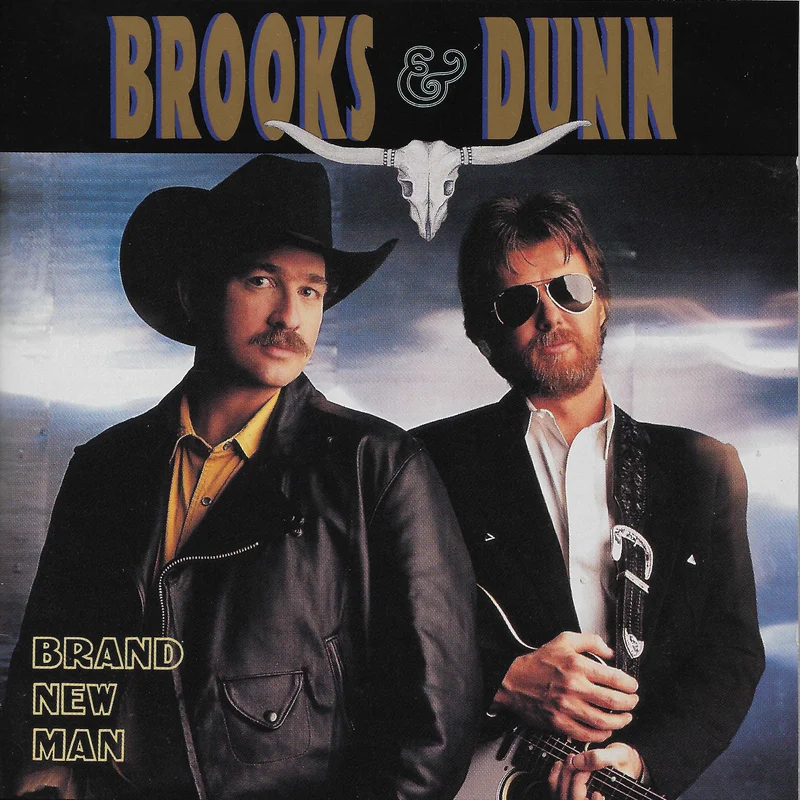
Brooks & Dunn
Brand New Man
A honky-tonk cathedral of heartbreak, bathed in flickering blue light.
When the sun goes down
On my side of town
That lonesome feelin'
Comes to my door
The whole world turns blue
There's a rundown bar
Cross the railroad tracks
I've got a table for two
Way in the back
Where I sit alone
And think of losing you
I spend most every night
Beneath the light
Of a neon moon
Now If you lose your one and only
There's always room here for the lonely
To watch your broken dreams
Dance in and out of the beams
Of a neon moon
I think of two young lovers
Running wild and free
I close my eyes
And sometimes see
You in the shadows
Of this smoke-filled room
No telling how many tears
I've sat here and cried
Or how many lies
That I've lied
Telling my poor heart
He'll come back someday
Ooh, but I'll be alright
As long as there's light
From a neon moon
Ooh, if you lose your one and only
There's always room here for the lonely
So watch your broken dreams
Dance in and out of the beams
Of a neon moon
The jukebox plays on
Drink by drink
And the words of every sad song
Seem to say what I think
And this hurt inside of me
Ain't never gonna end
Ooh, but I'll be alright
As long as there's light
From a neon moon
Ooh, if you lose your one and only
There's always room here for the lonely
To watch your broken dreams
Dance in and out of the beams
Of a neon moon
To watch your broken dreams
Dance in and out of the beams
Of a neon moon
Ooh, watch your broken dreams
Dance in and out of the beams
Of a neon moon
When the sun goes down
On my side of town
That lonesome feelin'
Comes to my door
The whole world turns blue
There's a rundown bar
Cross the railroad tracks
I've got a table for two
Way in the back
Where I sit alone
And think of losing you
I spend most every night
Beneath the light
Of a neon moon
Now If you lose your one and only
There's always room here for the lonely
To watch your broken dreams
Dance in and out of the beams
Of a neon moon
I think of two young lovers
Running wild and free
I close my eyes
And sometimes see
You in the shadows
Of this smoke-filled room
No telling how many tears
I've sat here and cried
Or how many lies
That I've lied
Telling my poor heart
He'll come back someday
Ooh, but I'll be alright
As long as there's light
From a neon moon
Ooh, if you lose your one and only
There's always room here for the lonely
So watch your broken dreams
Dance in and out of the beams
Of a neon moon
The jukebox plays on
Drink by drink
And the words of every sad song
Seem to say what I think
And this hurt inside of me
Ain't never gonna end
Ooh, but I'll be alright
As long as there's light
From a neon moon
Ooh, if you lose your one and only
There's always room here for the lonely
To watch your broken dreams
Dance in and out of the beams
Of a neon moon
To watch your broken dreams
Dance in and out of the beams
Of a neon moon
Ooh, watch your broken dreams
Dance in and out of the beams
Of a neon moon
“A honky-tonk cathedral of heartbreak, bathed in flickering blue light.”
Before Brooks & Dunn became the most decorated duo in country music history, before the matching cowboy hats and stadium pyrotechnics, there was a quiet moment of songwriting alchemy.
Ronnie Dunn penned "Neon Moon" in the solitude of a tiny apartment in Tulsa, Oklahoma, during a period when his own musical dreams felt like they were flickering on the edge of extinction.
He had been grinding through the Oklahoma bar circuit for over a decade, playing smoky roadhouses and half-empty dancehalls, watching relationships buckle under the weight of a musician's uncertain life.
The song poured out of him almost fully formed — a dispatch from the barstool of the soul.
When Arista Nashville's Tim DuBois paired Dunn with Kix Brooks in 1990, "Neon Moon" was one of the first songs Dunn brought to the table, a jewel from his years in the wilderness that would help define their partnership from its very first album.
Recorded at Nashville's Sound Stage Studios and produced by Don Cook and Scott Hendricks, "Brand New Man" was an album engineered to announce a new force in country music.
But "Neon Moon" stood apart from the more uptempo, rocking tracks that surrounded it.
Cook and Hendricks made the inspired decision to let the song breathe in a warm, unhurried arrangement that belied its steady 120 BPM pulse.
The production is a masterclass in restraint: a gently weeping steel guitar — played with aching precision by the legendary Sonny Garrish — floats above a bed of acoustic guitar and a pillowy, understated rhythm section.
Ronnie Dunn's vocal is mixed intimately, almost confessionally close, as though he's murmuring across that back-corner table directly into the listener's ear.
The electric guitar work shimmers with just enough reverb to evoke the glow of the titular sign, while a subtle fiddle threads through the arrangement like cigarette smoke curling toward the ceiling.
The key of C major lends the track an open, almost hymnal quality, yet the melody consistently gravitates toward minor intervals that tug the emotional register toward melancholy — a tension between the brightness of the key and the darkness of the narrative that gives the song its haunting, suspended quality.
Lyrically, "Neon Moon" is a masterwork of country imagism, building an entire emotional universe from a handful of perfectly chosen details.
The railroad tracks, the rundown bar, the table for two occupied by one — Dunn constructs a scene so vivid you can smell the spilled beer and feel the sticky vinyl of the booth.
The neon moon itself is the song's central metaphor, a breathtaking substitution: the narrator has traded the natural world — sunsets, moonlight, the open sky — for the artificial glow of a bar sign, a man-made moon that presides over a congregation of the brokenhearted.
"Watch your broken dreams dance in and out of the beams" is an image of devastating beauty, suggesting that even shattered hopes have a kind of grace when caught in the right light.
The emotional arc moves from loneliness to memory to self-deception ("telling my poor heart he'll come back someday") to a resigned, almost defiant acceptance.
There is no redemption here, no third-act reconciliation — just the quiet dignity of endurance, sustained by light that is beautiful precisely because it is artificial.
Released as the third single from "Brand New Man" in early 1992, "Neon Moon" climbed to number one on the Billboard Hot Country Singles chart, where it held the top position for two weeks.
It became the duo's fourth consecutive number-one hit, an unprecedented streak for a debut act that cemented their status as country music's dominant new partnership.
Critics hailed it as the album's emotional centerpiece, and many noted that it revealed a depth and vulnerability in Brooks & Dunn's catalog that their rowdier singles hadn't fully suggested.
The song resonated far beyond the traditional country audience; its themes of urban loneliness and barroom solace connected with listeners across demographic lines, and it became a staple of jukeboxes in exactly the kind of establishments it described.
In the broader landscape of early-1990s country — the era of Garth Brooks's arena-rock ambitions and the rise of the hat acts — "Neon Moon" stood as a reminder that the genre's deepest power still resided in a simple story, simply told.
More than three decades later, "Neon Moon" has transcended its era to become one of the most enduring songs in the country canon.
It has been covered by artists ranging from Clint Black to Kacey Musgraves, and its influence can be heard in the neon-lit melancholy of modern artists like Midland and Charley Crockett.
A viral resurgence on TikTok in the early 2020s introduced the song to an entirely new generation, with the track accumulating hundreds of millions of streams across digital platforms — numbers that would have been unimaginable when Dunn first scribbled the lyrics in that Tulsa apartment.
Brooks & Dunn themselves have acknowledged it as the emotional cornerstone of their catalog; at virtually every concert, it is the moment when the arena lights dim, the crowd sways, and tens of thousands of voices sing every word back.
"Neon Moon" endures because it captures something universal and irreducible: the way heartbreak sends us searching for shelter, and the way even the cheapest, most flickering light can feel like salvation when the darkness is deep enough.
It is not just a country song.
It is a room we have all sat in, a light we have all looked up at, a prayer we have all whispered to no one in particular.