LaVidaEsUnCarnaval
Celia Cruz
Para La Eternidad
The Queen of Salsa turns sorrow into a street parade of unstoppable joy.
Todo aquel que piense que la vida es desigual
Tiene que saber que no es así
Que la vida es una hermosura, hay que vivirla
Todo aquel que piense que está solo y que está mal
Tiene que saber que no es así
Que en la vida no hay nadie solo, siempre hay alguien
Ay, no hay que llorar (No hay que llorar)
Que la vida es un carnaval
Y es más bello vivir cantando
Oh-oh-oh, ay, no hay que llorar (No hay que llorar)
Que la vida es un carnaval
Y las penas se van cantando
Oh-oh-oh, ay, no hay que llorar (No hay que llorar)
Que la vida es un carnaval
Y es más bello vivir cantando
Oh-oh-oh, ay, no hay que llorar (No hay que llorar)
Que la vida es un carnaval
Y las penas se van cantando
Todo aquel que piense que la vida siempre es cruel
Tiene que saber que no es así
Que tan solo hay momentos malos y todo pasa
Todo aquel que piense que esto nunca va a cambiar
Tiene que saber que no es así
Que al mal tiempo, buena cara, y todo cambia
Ay, no hay que llorar (No hay que llorar)
Que la vida es un carnaval
Y es más bello vivir cantando
Oh-oh-oh, ay, no hay que llorar (No hay que llorar)
Que la vida es un carnaval
Y las penas se van cantando
Oh-oh-oh, ay, no hay que llorar (No hay que llorar)
Que la vida es un carnaval
Y es más bello vivir cantando
Oh-oh-oh, ay, no hay que llorar (No hay que llorar)
Que la vida es un carnaval
Y las penas se van cantando
(Carnaval) Es para reír
(No hay que llorar) Para gozar
(Carnaval) Para disfrutar
(Hay que vivir cantando)
(Carnaval) La vida es un carnaval
(No hay que llorar) Todos podemos cantar
(Carnaval) Ay, señores
(Hay que vivir cantando)
(Carnaval) Todo aquel que piense
(No hay que llorar) Que la vida es cruel
(Carnaval) Nunca estará solo
(Hay que vivir cantando)
Dios está con él
Para aquellos que se quejan tanto (Wua)
Para aquellos que solo critican (Wua)
Para aquellos que usan las armas (Wua)
Para aquellos que nos contaminan (Wua)
Para aquellos que hacen la guerra (Wua)
Para aquellos que viven pecando (Wua)
Para aquellos que nos maltratan (Wua)
Para aquellos que nos contagian (Wua)
Todo aquel que piense que la vida es desigual
Tiene que saber que no es así
Que la vida es una hermosura, hay que vivirla
Todo aquel que piense que está solo y que está mal
Tiene que saber que no es así
Que en la vida no hay nadie solo, siempre hay alguien
Ay, no hay que llorar (No hay que llorar)
Que la vida es un carnaval
Y es más bello vivir cantando
Oh-oh-oh, ay, no hay que llorar (No hay que llorar)
Que la vida es un carnaval
Y las penas se van cantando
Oh-oh-oh, ay, no hay que llorar (No hay que llorar)
Que la vida es un carnaval
Y es más bello vivir cantando
Oh-oh-oh, ay, no hay que llorar (No hay que llorar)
Que la vida es un carnaval
Y las penas se van cantando
Todo aquel que piense que la vida siempre es cruel
Tiene que saber que no es así
Que tan solo hay momentos malos y todo pasa
Todo aquel que piense que esto nunca va a cambiar
Tiene que saber que no es así
Que al mal tiempo, buena cara, y todo cambia
Ay, no hay que llorar (No hay que llorar)
Que la vida es un carnaval
Y es más bello vivir cantando
Oh-oh-oh, ay, no hay que llorar (No hay que llorar)
Que la vida es un carnaval
Y las penas se van cantando
Oh-oh-oh, ay, no hay que llorar (No hay que llorar)
Que la vida es un carnaval
Y es más bello vivir cantando
Oh-oh-oh, ay, no hay que llorar (No hay que llorar)
Que la vida es un carnaval
Y las penas se van cantando
(Carnaval) Es para reír
(No hay que llorar) Para gozar
(Carnaval) Para disfrutar
(Hay que vivir cantando)
(Carnaval) La vida es un carnaval
(No hay que llorar) Todos podemos cantar
(Carnaval) Ay, señores
(Hay que vivir cantando)
(Carnaval) Todo aquel que piense
(No hay que llorar) Que la vida es cruel
(Carnaval) Nunca estará solo
(Hay que vivir cantando)
Dios está con él
Para aquellos que se quejan tanto (Wua)
Para aquellos que solo critican (Wua)
Para aquellos que usan las armas (Wua)
Para aquellos que nos contaminan (Wua)
Para aquellos que hacen la guerra (Wua)
Para aquellos que viven pecando (Wua)
Para aquellos que nos maltratan (Wua)
Para aquellos que nos contagian (Wua)
“The Queen of Salsa turns sorrow into a street parade of unstoppable joy.”
By the late 1990s, Celia Cruz had already lived several lifetimes.
Exiled from her beloved Cuba since 1960, she had survived the collapse of the Fania Records empire, the death of disco, and the fickle tides of the Latin music industry — yet she remained standing, rhinestone crown firmly in place.
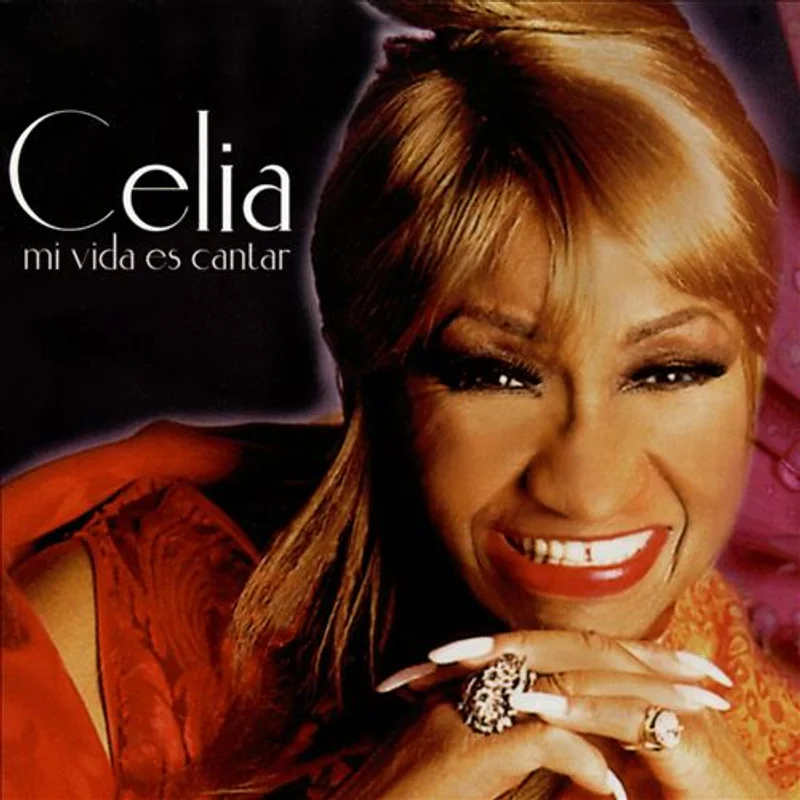
When she entered the studio with producer Isidro Infante to record what would become "Mi Vida Es Cantar" (1998) and its crown jewel "La Vida Es Un Carnaval," she was seventy-one years old and nursing a quiet grief: friends were dying, her homeland remained unreachable, and the new generation of pop-salsa stars threatened to render her legacy quaint.
None of that pain, however, would be permitted to darken the track.
Songwriter Víctor Daniel — a Dominican composer with a gift for anthemic simplicity — delivered a lyric that read like a secular prayer, and Cruz recognized it instantly as the sermon she had been preaching her entire career: that joy is not the absence of suffering but an act of defiance against it.
The production is a masterclass in controlled euphoria.
Recorded largely at Miami's Crescent Moon Studios — Emilio Estefan's playground — the arrangement locks into a driving 127-BPM groove that splits the difference between classic Cuban son montuno and late-'90s tropical pop.
The piano tumbles in bright montuno patterns in the key of G major, a tonality that radiates warmth and openness, while layered brass punches — trumpets and trombones voiced in tight, almost big-band clusters — provide the song's muscular backbone.
Congas, timbales, and a crisp programmed kick anchor the low end, giving DJs something to latch onto without sacrificing the organic swing of a live rhythm section.
Infante's arrangement builds in cinematic waves: verse, pre-chorus, chorus, and then the explosive soneo section where Cruz improvises over the call-and-response vamp, her voice arching above the horns like a flag snapping in Caribbean wind.
The energy reading of 0.75 and valence of 0.73 capture this perfectly — the track is buoyant but never manic, joyful but tempered by wisdom.
Lyrically, "La Vida Es Un Carnaval" operates on a deceptively simple architecture.
Each verse begins with the same rhetorical frame — "Todo aquel que piense…" ("Anyone who thinks…") — before gently correcting a falsehood: that life is unequal, that one is alone, that cruelty is permanent, that nothing ever changes.
The chorus answers every complaint with a single luminous metaphor: life is a carnival, and its sorrows dissolve when you sing.
But the song's true moral complexity emerges in the soneo, where Cruz pivots from consolation to confrontation.
She names the polluters, the warmongers, the abusers, the sinners — those who generate the very suffering the song seeks to transcend.
It is a rhetorical move worthy of a preacher: first she comforts the congregation, then she calls out the devils.
The emotional arc thus travels from empathy through celebration to righteous indignation, all without losing the dancing feet of its audience.
The recurring "¡Azúcar!" spirit — though the word itself does not appear in these lyrics — haunts every bar.
The song's reception was nothing short of volcanic.
Released as a single in 1998, it dominated Latin radio across the Americas and became an instant standard — the rare track that crossed generational, national, and class lines simultaneously.
It peaked at number one on multiple Latin charts, earned heavy rotation on MTV Latino, and became the de facto anthem of street parades, political rallies, and New Year's Eve celebrations from Bogotá to Barcelona.
Critics hailed it as proof that Cruz was not merely a nostalgia act but a living, evolving artist whose emotional intelligence outpaced performers half her age.
The song earned a Latin Grammy nomination and helped propel "Mi Vida Es Cantar" to gold and platinum certifications.
In the broader cultural landscape, it arrived at a moment when Latin pop was on the cusp of its late-'90s crossover explosion — Ricky Martin's "Livin' la Vida Loca" was just a year away — and Cruz's anthem provided the movement with its spiritual foundation: joy as resistance, rhythm as communal medicine.
More than a quarter-century later, "La Vida Es Un Carnaval" endures as one of the most universally recognized songs in the Spanish-language canon.
It has been covered and sampled by artists ranging from Marc Anthony to David Guetta; it soundtracks World Cup montages, telenovela finales, and protest marches with equal ease.
When Celia Cruz passed away in July 2003, tens of thousands of mourners lined the streets of Miami and New York, many of them singing this very song through their tears — the ultimate proof of its thesis that sorrow and celebration are not opposites but partners in the dance of being alive.
In the arc of Cruz's monumental discography, the track stands as both a culmination and a distillation: sixty years of exile, loss, reinvention, and unbreakable spirit compressed into four minutes of G-major glory.
It is, in the end, exactly what it claims to be — a carnival — and like all great carnivals, it makes room for everyone.