Higher
Creed
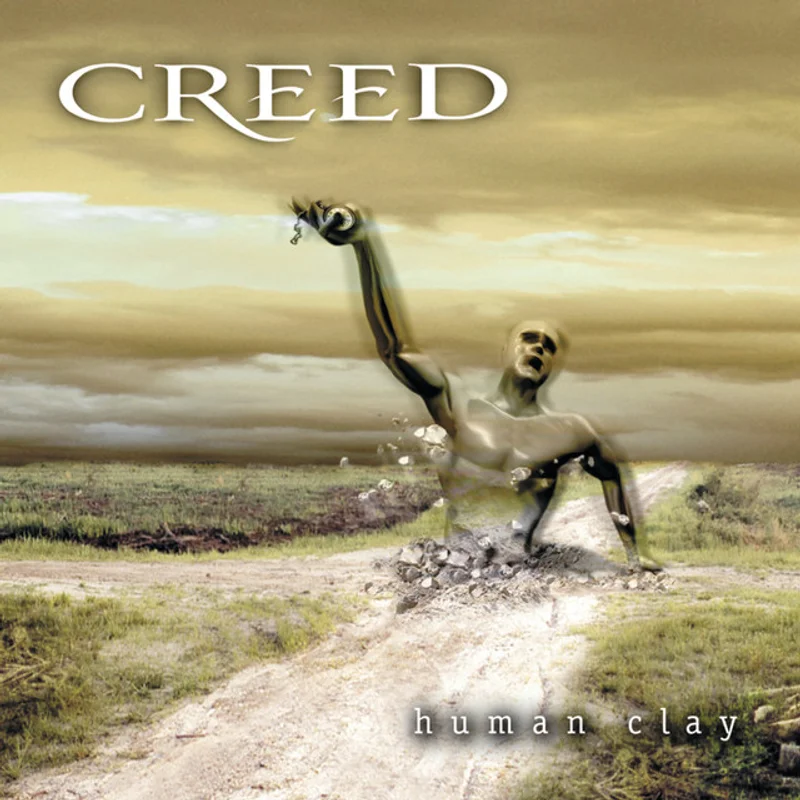
Human Clay
A post-grunge anthem that turned spiritual yearning into stadium-sized transcendence.
When dreaming
I'm guided to another world
Time and time again
At sunrise, I fight to stay asleep
'Cause I don't want to leave the comfort of this place
'Cause there's a hunger, a longing to escape
From the life I live when I'm awake
So let's go there
Let's make our escape
Come on, let's go there
Let's ask can we stay
Can you take me higher
To a place where blind men see
Can you take me higher
To a place with golden streets
Although I would like our world to change
It helps me to appreciate
Those nights and those dreams
But my friend
I'd sacrifice all those nights
If I could make the Earth and my dreams the same
The only difference is
To let love replace all our hate
So let's go there
Let's make our escape
Come on, let's go there
Let's ask can we stay
Can you take me higher
To a place where blind men see
Can you take me higher
To a place with golden streets
So let's go there (so let's go there)
Let's go there (Let's go there)
Come on, let's go there (come on let's go there)
Let's ask can we stay
Up high, I feel like I'm
Alive for the very first time
Said up high, I'm strong enough
To take these dreams
And make them mine
Said up high, I'm strong enough
To take these dreams
And make them mine
Can you take me higher
To a place where blind men see
Can you take me higher
To a place with golden streets
Can you take me higher
To a place where blind men see
Can you take me higher
To a place with golden streets
When dreaming
I'm guided to another world
Time and time again
At sunrise, I fight to stay asleep
'Cause I don't want to leave the comfort of this place
'Cause there's a hunger, a longing to escape
From the life I live when I'm awake
So let's go there
Let's make our escape
Come on, let's go there
Let's ask can we stay
Can you take me higher
To a place where blind men see
Can you take me higher
To a place with golden streets
Although I would like our world to change
It helps me to appreciate
Those nights and those dreams
But my friend
I'd sacrifice all those nights
If I could make the Earth and my dreams the same
The only difference is
To let love replace all our hate
So let's go there
Let's make our escape
Come on, let's go there
Let's ask can we stay
Can you take me higher
To a place where blind men see
Can you take me higher
To a place with golden streets
So let's go there (so let's go there)
Let's go there (Let's go there)
Come on, let's go there (come on let's go there)
Let's ask can we stay
Up high, I feel like I'm
Alive for the very first time
Said up high, I'm strong enough
To take these dreams
And make them mine
Said up high, I'm strong enough
To take these dreams
And make them mine
Can you take me higher
To a place where blind men see
Can you take me higher
To a place with golden streets
Can you take me higher
To a place where blind men see
Can you take me higher
To a place with golden streets
“A post-grunge anthem that turned spiritual yearning into stadium-sized transcendence.”
In the sweltering summer of 1999, Creed — the Tallahassee-born quartet that had already defied every critic's expectation with their six-times-platinum debut "My Own Prison" — retreated into a creative crucible that would yield one of the most ubiquitous rock songs of the late twentieth century.
Guitarist Mark Tremonti had been carrying around a riff for months, a deceptively simple progression in C major that shimmered with an almost hymnal quality.
When he brought it to vocalist Scott Stapp, the frontman heard something celestial in its architecture.
Stapp, then navigating the disorienting vertigo of sudden fame and grappling with the spiritual questions that had haunted him since his strict religious upbringing, channeled those tensions into a lyric that reads like a waking prayer — a man caught between the paradise of his dreams and the fractured reality of the world around him.
The track was recorded at Wind-Up Studios with producer John Kurzweg, whose warm, muscular production style had already defined the band's sound on their debut.
Kurzweg understood that "Higher" needed to breathe — that its power lay not in bludgeoning the listener but in a slow, gravitational pull upward.
Sonically, "Higher" is a masterclass in post-grunge dynamics, a song that understands the architecture of tension and release as instinctively as any Seattle record from the decade's early years.
The track opens with Tremonti's clean, arpeggiated guitar figure — crystalline and almost vulnerable — before the full band enters with a controlled swell that mirrors the lyric's journey from private reverie to public declaration.
Tremonti's tone throughout is warm and mid-heavy, eschewing the scooped, hyper-distorted sound that plagued many of their contemporaries.
Scott Phillips' drumming is patient and deliberate, locking into a groove at approximately 120 BPM that gives the song a heartbeat-like steadiness, while Brian Marshall's bass provides a low-end foundation that rumbles beneath the verses like distant thunder before a storm.
Kurzweg's production choices are notable for their restraint: the layers build incrementally, with overdubbed guitars stacking during the chorus to create a wall of sound that feels earned rather than imposed.
The key of C major — the most open, unadorned key on the piano, the key of innocence in classical tradition — lends the track an accessibility and emotional transparency that more harmonically complex choices might have obscured.
Lyrically, "Higher" operates on a knife's edge between the spiritual and the secular, a duality that both fueled and frustrated the discourse around Creed throughout their career.
The opening image — dreaming, being guided to another world, fighting at sunrise to remain asleep — is universal enough to resonate with anyone who has ever preferred the landscape of their unconscious to the demands of waking life.
But Stapp pushes beyond mere escapism.
The chorus's invocation of "a place where blind men see" and "golden streets" draws unmistakably from biblical imagery — Revelation's New Jerusalem, the healing miracles of the Gospels — yet the song's emotional arc ultimately rejects passive transcendence in favor of active transformation.
The bridge is the lyrical fulcrum: "I'd sacrifice all those nights / If I could make the Earth and my dreams the same / The only difference is / To let love replace all our hate." Here, the utopian vision is not a destination but a challenge, a call to remake the waking world in the image of the dream.
The final section — "Up high, I feel like I'm alive for the very first time" — completes the arc, transforming the dreamer into an agent of his own elevation.
It is aspiration crystallized into anthem.
The cultural moment into which "Higher" arrived could not have been more receptive.
Released as the second single from "Human Clay" in September 1999, the song entered a rock landscape that was hungry for sincerity after years of ironic detachment.
Nu-metal was ascendant, pop-punk was thriving, and yet there was a vast audience — the same audience that had made Matchbox Twenty and Third Eye Blind into multi-platinum acts — that craved emotional directness delivered with genuine musical muscle.
"Higher" gave them exactly that.
The single peaked at number seven on the Billboard Hot 100 and reached number one on the Hot Mainstream Rock Tracks chart, where it remained for a remarkable seventeen weeks.
"Human Clay" itself would go on to sell over eleven million copies in the United States alone, making it one of the best-selling albums of the era.
Critics were divided — they often were with Creed — but the public's verdict was unequivocal.
The song became inescapable: on rock radio, at sporting events, in dorm rooms and churches alike, its chorus became a shared language for a generation straddling the millennium.
The legacy of "Higher" is inextricable from the complicated legacy of Creed themselves — a band that inspired both fervent devotion and withering scorn in nearly equal measure.
Yet time has been kinder to this song than to many of its contemporaries.
Stripped of the cultural baggage that accumulated around the band during their acrimonious breakup and Stapp's well-documented personal struggles, "Higher" reveals itself as a genuinely well-crafted piece of songwriting — a track whose emotional sincerity, once mocked as overwrought, now reads as refreshingly unguarded in an age of algorithmic detachment.
It has endured in unexpected contexts: as a meme-culture touchstone, as a karaoke staple, as a song that athletes still cite as a pre-game ritual.
Mark Tremonti's subsequent acclaim with Alter Bridge and his solo work has retroactively burnished the musicianship on display here, reminding listeners that behind the divisive frontman was a guitarist of uncommon melodic intelligence.
"Higher" endures because its central question — can we transcend the world as it is and reach toward the world as it should be — is one that never stops being relevant.
It is a song about the ache of idealism, and that ache does not expire.
In the broader sweep of late-nineties rock, "Higher" occupies a singular position: it is the song that proved post-grunge could be both commercially dominant and emotionally ambitious, that a band could sell millions of records not by dumbing down their spiritual preoccupations but by leaning into them with full-throated conviction.
Whether one hears it as a rock anthem, a secular hymn, or a millennial time capsule, its power remains remarkably intact — a four-and-a-half-minute argument that sincerity, delivered with enough musical force and melodic grace, can still move the earth.