CaribbeanBlue-2009Remaster
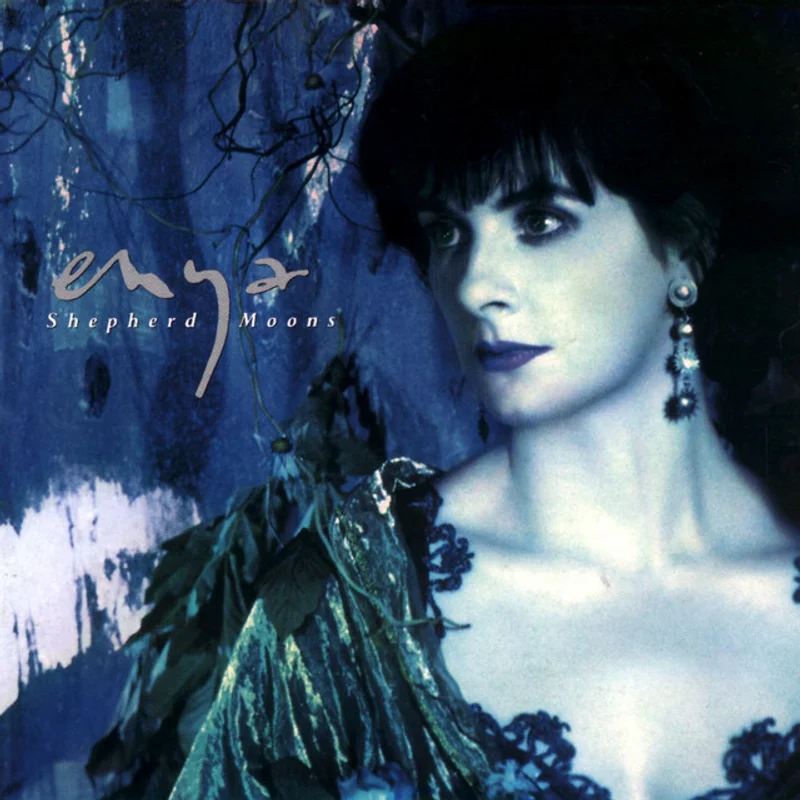
Enya
Shepherd Moons
Where ancient winds meet infinite blue — Enya's masterpiece of celestial longing.
Eurus
Afer Ventus
So the world goes round and round
With all you ever knew
They say the sky high above
Is Caribbean blue?
If every man says all he can
If every man is true
Do I believe the sky above
Is Caribbean blue?
Boreas
Zephyrus
If all you told was turned to gold
If all you dreamed was new
Imagine sky high above
In Caribbean blue
Eurus
Afer Ventus
Boreas
Zephyrus
Africus
Eurus
Afer Ventus
So the world goes round and round
With all you ever knew
They say the sky high above
Is Caribbean blue?
If every man says all he can
If every man is true
Do I believe the sky above
Is Caribbean blue?
Boreas
Zephyrus
If all you told was turned to gold
If all you dreamed was new
Imagine sky high above
In Caribbean blue
Eurus
Afer Ventus
Boreas
Zephyrus
Africus
“Where ancient winds meet infinite blue — Enya's masterpiece of celestial longing.”
In the autumn of 1991, from within the cloistered walls of Aigle Studio in Artane, Dublin, Enya Brennan and her longtime collaborators — lyricist Roma Ryan and producer Nicky Ryan — were deep into the creation of what would become one of the most commercially successful New Age albums ever recorded.
"Caribbean Blue" emerged as the lead single from *Shepherd Moons*, an album born from the unexpected global triumph of *Watermark* and its signature track "Orinoco Flow." Enya was navigating the peculiar pressure of following up a phenomenon, yet she retreated not into imitation but deeper into her own singular aesthetic universe.
The song was conceived as a meditation on perception and wonder — a question posed to the sky itself — and it would become the luminous centerpiece of an album that sold over ten million copies worldwide.
The production of "Caribbean Blue" is a masterclass in layered etherealism.
Nicky Ryan, working with what was at the time relatively modest recording technology, constructed a cathedral of sound from Enya's multi-tracked vocals — reportedly stacking upwards of two hundred individual vocal passes to create the shimmering, chorale-like textures that define the track.
The arrangement floats on a bed of synthesized strings and warm keyboard pads, punctuated by crisp programmed percussion that gives the song its gentle but insistent forward motion.
Despite its dreamy quality, the track moves at a surprisingly brisk 120 BPM, lending it an almost processional grandeur.
The key of C major — the most open, unadorned of keys — reinforces the song's sense of purity and clarity, as though the music itself is trying to achieve the transparency of the sky it describes.
There are no guitars, no bass in the traditional sense, no session musicians cluttering the frame; this is Enya alone, multiplied into a one-woman orchestra.
Roma Ryan's lyrics operate on two interlocking planes.
The English verses pose a deceptively simple philosophical question: if everything we are told is true, if every man speaks honestly, can we trust the beauty we perceive?
Is the sky really that impossibly perfect shade of Caribbean blue, or is it a projection of our longing?
Woven between these verses are invocations of the four classical winds of antiquity — Eurus (the east wind), Afer Ventus (the southwest wind, also called Africus), Boreas (the north wind), and Zephyrus (the gentle west wind).
These Latin names are not mere ornamentation; they anchor the song in a mythological framework that stretches back to Greek and Roman cosmology, suggesting that the human impulse to name and romanticize the natural world is as old as civilization itself.
The emotional arc moves from questioning to imagining — from "Do I believe?" to "Imagine" — a subtle but profound shift from doubt to wonder.
Released in October 1991, "Caribbean Blue" was an immediate international success.
It reached number thirteen on the UK Singles Chart, topped the Billboard Hot Adult Contemporary chart in the United States, and charted across Europe, Australia, and Japan.
Critics praised it as a worthy successor to "Orinoco Flow," noting its more contemplative and less overtly pop-oriented structure.
*Shepherd Moons* itself won the Grammy Award for Best New Age Album in 1993, and "Caribbean Blue" was widely regarded as its defining moment.
The song arrived at a cultural inflection point — the early 1990s saw a growing mainstream appetite for ambient, meditative, and world music influences, and Enya was uniquely positioned at that crossroads.
She was neither fully pop nor fully New Age; she existed in a liminal space that millions of listeners found irresistible.
The accompanying music video, directed by Michael Geoghegan, drew on the paintings of Pre-Raphaelite artist John William Waterhouse, placing Enya within lush, painterly tableaux that reinforced the song's themes of myth, nature, and idealized beauty.
It became a staple on MTV Europe and helped cement Enya's visual identity as an artist who existed outside of time — neither modern nor ancient, but somewhere in between.
More than three decades later, "Caribbean Blue" endures as one of Enya's most beloved and recognizable compositions.
It has been licensed for countless film and television placements, sampled and referenced by electronic producers, and discovered anew by generations of listeners seeking refuge in its crystalline calm.
In an era of algorithmic playlists and lo-fi study beats, the song's architecture — its patience, its layered complexity, its refusal to rush — feels almost prophetic.
It anticipated the modern hunger for sonic spaces that slow the pulse and expand the mind.
Within Enya's catalog, it stands alongside "Orinoco Flow" and "Only Time" as one of the three pillars of her artistic legacy: a song that asks us, with the gentlest insistence, to look up and believe in the impossible blue above.