IevanPolkka
Korpiklaani
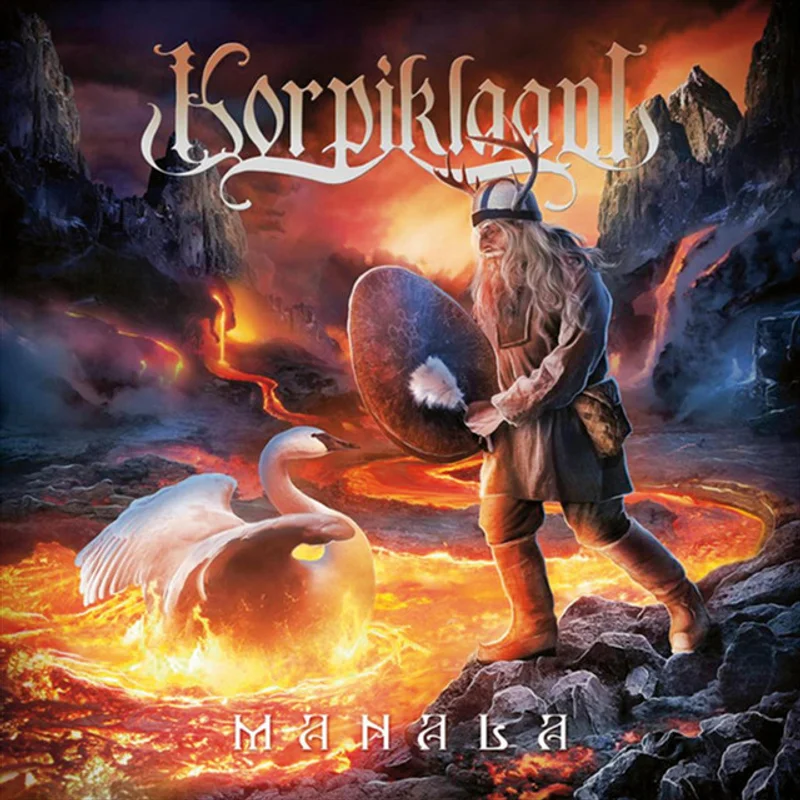
Manala
A centuries-old Finnish folk song reborn in a storm of fiddles, ale, and defiant joy.
Hey hey
Nuapurista kuulu se polokan tahti
Jalakani pohjii kutkutti
Ievan äiti se tyttöösä vahti
Vaan kyllähän Ieva sen jutkutti
Sillä ei meitä silloin kiellot haittaa
Kun myö tanssimme laiasta laitaan
Haia haia haia haia
Haia haia ha haia
Ievan suu oli vehnäsellä
Ko immeiset onnee toevotti
Peä oli märkänä jokaisella
Ja viulu se vinku ja voevotti
Ei tätä poikoo märkyys haittaa
Sillon ko laskoo laiasta laitaan
Haia haia haitaa haia
Haia haia ha haia
Ievan äiti se kammarissa
Virsiä veisata huijjuutti
Kun tämä poika naapurissa
Ämmän tyttöä nuijjuutti
Eikä tätä poikoo ämmät haittaa
Sillon ko laskoo laiasta laitaan
Eikä tätä poikoo ämmät haittaa
Sillon ko laskoo laiasta laitaan
Siellä oli lystiä soiton jäläkeen
Sain minä kerran sytkyyttee
Kottiin ko mäntii ni ämmä se riitelj
Ja Ieva jo alako nyyhkyytteek
Minä sanon Ievalle mitäpä se haittaa
Laskemma vielähi laiasta laitaa
Minä sanon Ievalle mitäpä se haittaa
Laskemma vielähi laiasta laitaa
Muorille sanon jotta tukkee suusi
En ruppee sun terveyttäs takkoomaa
Terveenä peäset ku korjoot luusi
Ja määt siitä murjuus makkoomaa
Ei tätä poikoo hellyys haittaa
Ko akkoja huhkii laiasta laitaan
Ei tätä poikoo hellyys haittaa
Ko akkoja huhkii laiasta laitaan
Sen minä sanon jotta purra pittää
Ei mua niin voan nielasta
Suat männä ite vaikka lännestä ittään
Vaan minä en luovu Ievasta
Sillä ei tätä poikoo kainous haittaa
Sillon ko tanssii laiasta laitaan
Salivili hipput tupput täppyt
Äppyt tipput hilijalleen
Salivili hipput tupput täppyt
Äppyt tipput hilijalleen
Hey hey
Nuapurista kuulu se polokan tahti
Jalakani pohjii kutkutti
Ievan äiti se tyttöösä vahti
Vaan kyllähän Ieva sen jutkutti
Sillä ei meitä silloin kiellot haittaa
Kun myö tanssimme laiasta laitaan
Haia haia haia haia
Haia haia ha haia
Ievan suu oli vehnäsellä
Ko immeiset onnee toevotti
Peä oli märkänä jokaisella
Ja viulu se vinku ja voevotti
Ei tätä poikoo märkyys haittaa
Sillon ko laskoo laiasta laitaan
Haia haia haitaa haia
Haia haia ha haia
Ievan äiti se kammarissa
Virsiä veisata huijjuutti
Kun tämä poika naapurissa
Ämmän tyttöä nuijjuutti
Eikä tätä poikoo ämmät haittaa
Sillon ko laskoo laiasta laitaan
Eikä tätä poikoo ämmät haittaa
Sillon ko laskoo laiasta laitaan
Siellä oli lystiä soiton jäläkeen
Sain minä kerran sytkyyttee
Kottiin ko mäntii ni ämmä se riitelj
Ja Ieva jo alako nyyhkyytteek
Minä sanon Ievalle mitäpä se haittaa
Laskemma vielähi laiasta laitaa
Minä sanon Ievalle mitäpä se haittaa
Laskemma vielähi laiasta laitaa
Muorille sanon jotta tukkee suusi
En ruppee sun terveyttäs takkoomaa
Terveenä peäset ku korjoot luusi
Ja määt siitä murjuus makkoomaa
Ei tätä poikoo hellyys haittaa
Ko akkoja huhkii laiasta laitaan
Ei tätä poikoo hellyys haittaa
Ko akkoja huhkii laiasta laitaan
Sen minä sanon jotta purra pittää
Ei mua niin voan nielasta
Suat männä ite vaikka lännestä ittään
Vaan minä en luovu Ievasta
Sillä ei tätä poikoo kainous haittaa
Sillon ko tanssii laiasta laitaan
Salivili hipput tupput täppyt
Äppyt tipput hilijalleen
Salivili hipput tupput täppyt
Äppyt tipput hilijalleen
“A centuries-old Finnish folk song reborn in a storm of fiddles, ale, and defiant joy.”
Long before Korpiklaani committed "Ievan Polkka" to tape for their 2012 album *Manala*, the song had already lived many lives.
The lyrics, written in the Savonian dialect of Finnish by Eino Kettunen in the 1930s, tell a timeless tale of youthful rebellion, forbidden dancing, and romantic defiance — a young man and a girl named Ieva who refuse to let her disapproving mother stop them from spinning across the dance floor.
The melody itself is older still, rooted in the polkka tradition that swept through rural Finland in the nineteenth century.
For Korpiklaani — a band whose very name means "Wilderness Clan" — this was not merely a cover but a reclamation, a chance to drag a beloved folk artifact through the mud and mead of modern folk metal and make it roar.
Recorded at Petrax Studios in Hollola, Finland, under the steady hand of producer Janne Saksa, the *Manala* sessions found Korpiklaani at a fascinating creative crossroads.
The album's title translates to the Finnish underworld of the dead, and much of the record is steeped in dark mythology drawn from the *Kalevala* and Finnish shamanic tradition.
Yet "Ievan Polkka" arrives like a bonfire in the middle of a graveyard — a blast of pure kinetic energy at 133 BPM, keyed in D minor, a tonality that lends the celebration an undercurrent of urgency and melancholy even as the tempo demands movement.
The production is dense but never cluttered: Tuomas Rounakari's fiddle slices through the wall of distorted guitars like a blade through birch bark, while accordion lines weave in and out of Jonne Järvelä's gravelly, exuberant vocals.
The rhythm section — Matson Vergho on drums and Jarkko Aaltonen on bass — locks into a relentless gallop that channels both the polkka's traditional two-step and the propulsive drive of thrash metal.
Lyrically, the song is a masterclass in comedic narrative compressed into folk-song economy.
The story unfolds in vivid scenes: Ieva's mother stands guard, singing hymns in her chamber, blissfully unaware — or willfully ignorant — that the boy next door is courting her daughter with abandon.
Sweat drips from every brow as the fiddle screams and wails.
When the mother finally discovers the affair and scolds them both, the narrator is unrepentant, telling the old woman to shut her mouth and go to bed.
The emotional arc moves from mischief to confrontation to triumphant declaration — "I will not give up Ieva" — before dissolving into the famous nonsense syllables of the final verse, those "salivili hipput tupput täppyt" phrases that function as pure vocal percussion, a joyous surrender to rhythm over meaning.
The valence data reads low at 0.36, and indeed, beneath the revelry there is something fierce and almost desperate — this is not polite celebration but defiance danced on the edge of consequence.
By the time Korpiklaani released their version, "Ievan Polkka" had already achieved a peculiar kind of internet immortality.
A 2006 Flash animation featuring a cartoon girl swinging a leek to Loituma's 1995 a cappella rendition — the so-called "Leekspin" meme — had introduced the melody to millions who could not place Finland on a map.
Hatsune Miku, the Japanese Vocaloid, had sung it.
It had been remixed, sampled, and parodied across dozens of languages and genres.
Korpiklaani's contribution was to anchor the song back in physical, visceral performance — to remind listeners that this was music born of bodies in motion, of wooden floors bending under stamping feet, of real instruments played with calloused hands.
Critics praised the *Manala* album as one of the band's most cohesive works, and "Ievan Polkka" became an instant fan favorite and concert staple, a moment in every setlist where the boundary between stage and crowd dissolved entirely.
The legacy of Korpiklaani's "Ievan Polkka" is inseparable from the broader story of folk metal's rise as a global phenomenon in the 2000s and 2010s — a movement that proved traditional music and extreme metal were not just compatible but combustible together.
The track stands as a bridge between eras and aesthetics: Eino Kettunen's dialect poetry, the polkka rhythms of agrarian Finland, the distortion and double-kick fury of Scandinavian metal, and the viral democracy of internet culture all converge in a single, breathless performance.
It is a song about refusing to stop dancing no matter who disapproves, and in that sense it is also a mission statement for a band — and a genre — that never asked permission to exist.
On this deluxe vinyl reissue, pressed with the weight and warmth the recording deserves, you can hear every fiddle scrape, every guttural laugh embedded in Järvelä's delivery, every thump of the kick drum like a fist on a tavern table.
Put the needle down.
Dance from wall to wall.