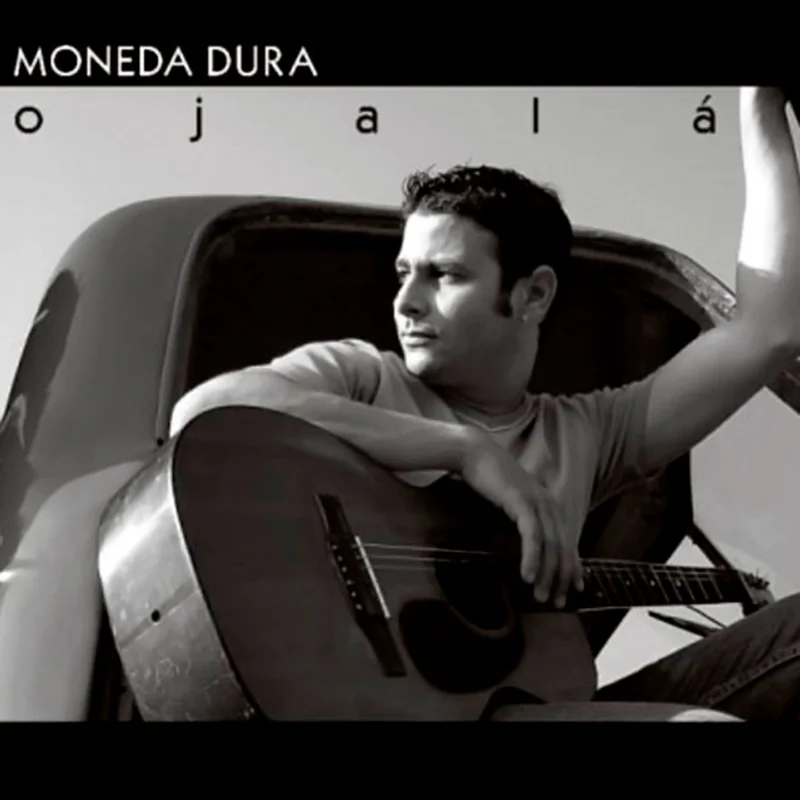
Ojalá-Remasterizado
Moneda Dura
Ojalá (Remasterizado)
A devastating prayer for forgetting, wrapped in the ghost of Silvio Rodríguez's masterpiece.
Ojala que las hojas no te toquen el cuerpo cuando caiga
Para que no las puedas convertir en cristal
Ojala que la lluvia deje de ser milagro que baja por tu cuerpo
Ojala que la luna pueda salir sin ti
Ojala que la tierra no te bese los pasos
Ojala se te acabe la mirada constante
La palabra precisa la sonrisa perfecta
Ojala pase algo que te borre de pronto
Una luz segadora un disparo de nieve
Ojala que por lo menos te lleve la muerte
Para no verte tanto para no verte siempre
En todos los segundos en todas la visiones
Ojala que no pueda tocarte ni en canciones
Ojala que la aurora no de gritos que caigan en mi espalda
Ojala que tu nombre se le olvide el sabor
Ojala las paredes no retengan tu ruido de camino cansado
Ojala que el deseo se vaya tras de ti
A tu viejo gobierno de difuntos y flores
Ojala se te acabe la mirada constante
La palabra precisa la sonrisa perfecta
Ojala pase algo que te borre de pronto
Una luz segadora un disparo de nieve
Ojala que por lo menos te lleve la muerte
Para no verte tanto para no verte siempre
En todos los segundos en todas la visiones
Ojala que no pueda tocarte ni en canciones
Ojala pase algo que te borre de pronto
Una luz segadora un disparo de nieve
Ojala que por lo menos te lleve la muerte
Para no verte tanto para no verte siempre
En todos los segundos en todas la visiones
Ojala que no pueda tocarte ni en canciones
Ojala pase algo que te borre de pronto
Una luz segadora un disparo de nieve
Ojala que por lo menos te lleve la muerte
Para no verte tanto para no verte siempre
En todos los segundos en todas la visiones
Ojala que no pueda tocarte ni en canciones
Ojala pase algo que te borre de pronto
Una luz segadora un disparo de nieve
Ojala por lo menos te lleve la muerte
Para no verte tanto para no verte siempre
En todos los segundos en todas la visiones
Ojala que no pueda tocarte ni en canciones
Ojala pase algo que te borre de pronto
Una luz segadora un disparo de nieve
Ojala por lo menos te lleve la muerte
Para no verte tanto para no verte siempre
En todos los segundos en todas la visiones
Ojala que no pueda tocarte ni en canciones
Ojala que las hojas no te toquen el cuerpo cuando caiga
Para que no las puedas convertir en cristal
Ojala que la lluvia deje de ser milagro que baja por tu cuerpo
Ojala que la luna pueda salir sin ti
Ojala que la tierra no te bese los pasos
Ojala se te acabe la mirada constante
La palabra precisa la sonrisa perfecta
Ojala pase algo que te borre de pronto
Una luz segadora un disparo de nieve
Ojala que por lo menos te lleve la muerte
Para no verte tanto para no verte siempre
En todos los segundos en todas la visiones
Ojala que no pueda tocarte ni en canciones
Ojala que la aurora no de gritos que caigan en mi espalda
Ojala que tu nombre se le olvide el sabor
Ojala las paredes no retengan tu ruido de camino cansado
Ojala que el deseo se vaya tras de ti
A tu viejo gobierno de difuntos y flores
Ojala se te acabe la mirada constante
La palabra precisa la sonrisa perfecta
Ojala pase algo que te borre de pronto
Una luz segadora un disparo de nieve
Ojala que por lo menos te lleve la muerte
Para no verte tanto para no verte siempre
En todos los segundos en todas la visiones
Ojala que no pueda tocarte ni en canciones
Ojala pase algo que te borre de pronto
Una luz segadora un disparo de nieve
Ojala que por lo menos te lleve la muerte
Para no verte tanto para no verte siempre
En todos los segundos en todas la visiones
Ojala que no pueda tocarte ni en canciones
Ojala pase algo que te borre de pronto
Una luz segadora un disparo de nieve
Ojala que por lo menos te lleve la muerte
Para no verte tanto para no verte siempre
En todos los segundos en todas la visiones
Ojala que no pueda tocarte ni en canciones
Ojala pase algo que te borre de pronto
Una luz segadora un disparo de nieve
Ojala por lo menos te lleve la muerte
Para no verte tanto para no verte siempre
En todos los segundos en todas la visiones
Ojala que no pueda tocarte ni en canciones
Ojala pase algo que te borre de pronto
Una luz segadora un disparo de nieve
Ojala por lo menos te lleve la muerte
Para no verte tanto para no verte siempre
En todos los segundos en todas la visiones
Ojala que no pueda tocarte ni en canciones
“A devastating prayer for forgetting, wrapped in the ghost of Silvio Rodríguez's masterpiece.”
To understand Moneda Dura's "Ojalá," one must first reckon with the towering shadow of Silvio Rodríguez, whose original 1969 composition stands as perhaps the most celebrated song in the entire canon of Nueva Trova — and arguably in all of Latin American popular music.
When the Havana-based rock band Moneda Dura chose to reinterpret this sacred text, they were not merely covering a song; they were engaging in a dialogue with Cuban cultural identity itself.
Formed in the late 1990s amid Cuba's Período Especial, Moneda Dura had already carved a reputation as fearless boundary-crossers, fusing rock, funk, and pop with the island's deep musical traditions.
This remastered version represents the band at a moment of confident maturity, revisiting a classic with the clarity that only hindsight and refined production can offer.
Sitting at a measured 120 BPM in the open, unadorned key of C major, the track occupies a fascinating middle ground — its energy and valence both hovering at a perfect 0.50, as if the song itself cannot decide whether it is a love letter or an exorcism.
The production on this remastered edition breathes new life into the arrangement, widening the stereo field and lending greater depth to the low end while preserving the organic warmth of the original recording.
Moneda Dura's approach strips away the sparse acoustic intimacy of Rodríguez's version and replaces it with a full-band treatment: electric guitars that shimmer with restrained distortion, a rhythm section that pulses with understated urgency, and vocal harmonies that build across the song's repetitive, almost incantatory structure.
The remastering process has brought forward subtle details — the brush of fingers on strings, the room tone of the studio — that reward close listening on vinyl.
Lyrically, "Ojalá" is a masterwork of paradox, and Moneda Dura honors every contradictory syllable.
The word "ojalá" itself — derived from the Arabic "inshallah," meaning "God willing" — carries centuries of longing in its etymology, a linguistic artifact of Moorish Spain that traveled across the Atlantic to root itself in Cuban Spanish.
The narrator wishes for the impossible: that leaves will not touch the beloved's body, that rain will cease its miraculous descent along their skin, that the moon might rise without them.
These are not wishes for happiness but for erasure — the desperate prayer of someone so consumed by another's presence that they beg for obliteration.
"Ojalá que por lo menos te lleve la muerte / para no verte tanto, para no verte siempre" — may death at least take you, so I don't have to see you always — is among the most devastating couplets in the Spanish language, a line that equates love with a kind of haunting from which only annihilation offers relief.
The imagery of "una luz segadora" (a blinding light) and "un disparo de nieve" (a shot of snow) conjures both violence and purity, destruction and transcendence.
Within Cuba's complex cultural ecosystem, where Nueva Trova occupies a near-sacred position, any rock band daring to reinterpret Silvio Rodríguez invites both admiration and scrutiny.
Moneda Dura's version was received as a respectful yet boldly reimagined tribute, one that introduced the song to younger audiences who might have encountered Rodríguez's catalog as the music of their parents' generation.
The track became a staple of the band's live performances and helped solidify their reputation as one of Cuba's most important rock acts — a band capable of honoring tradition while pushing it forward.
In the broader Latin American context, the cover joined a lineage of artists who have attempted "Ojalá," but few have so convincingly transplanted it into a new sonic world while preserving its emotional devastation.
The legacy of this remastered "Ojalá" extends beyond its status as a cover.
It stands as a document of Cuban rock's vitality and its ongoing conversation with the island's troubadour tradition.
In a country where access to recording technology and distribution has historically been limited, the very existence of a deluxe remastered edition speaks to a growing recognition of Cuban rock's archival importance.
For listeners encountering this track on vinyl for the first time, the experience is revelatory: the song's repetitive, spiraling structure — those final verses cycling through the same desperate wishes with mounting intensity — takes on a hypnotic, almost ritualistic quality when given the full analog treatment.
"Ojalá" endures because its central emotion is universal and timeless: the terrible wish to un-love someone, the knowledge that such a wish is itself proof of love's inescapable grip.