DarkChestofWonders
Nightwish
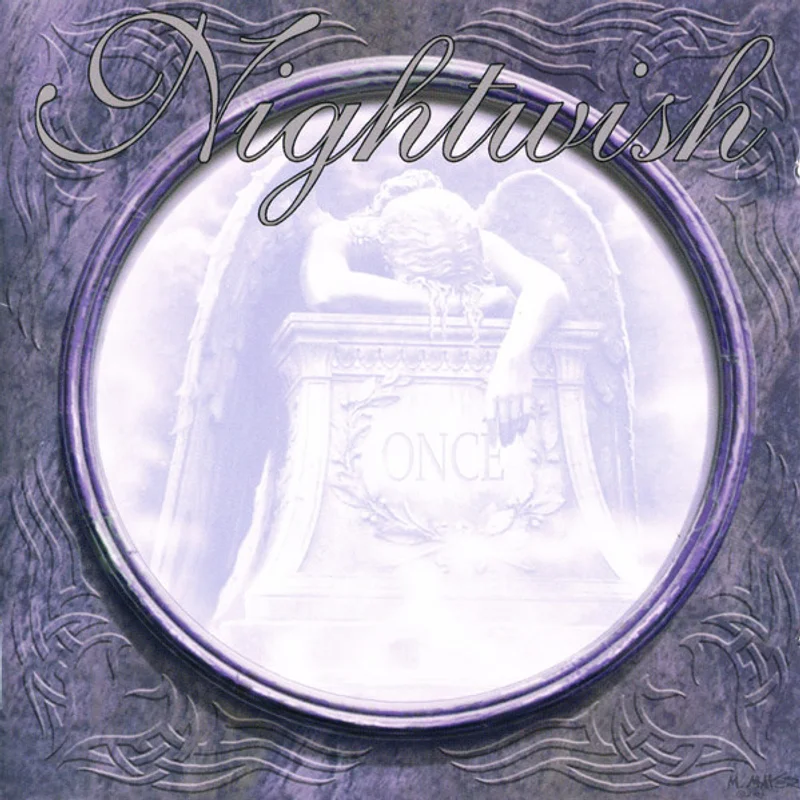
Once
A symphonic thunderclap that dares you to reclaim the wonder stolen by the world.
Once, I had a dream
And this is it
(Oh, oh)
(Once, there was a child's dream)
One night, the clock struck twelve, the window open wide
(Once, there was a child's heart)
The age I learned to fly and took a step outside
(Once, I knew all the tales)
It's time to turn back time
Follow the pale moonlight
(Once, I wished for this night)
Faith brought me here
It's time to cut the rope and
Fly to a dream
Far across the sea
All the burdens gone
Open the chest once more
Dark chest of wonders
Seen through the eyes
Of the one with pure heart
Once, so long ago
The one in the big blue is what the world stole from me
This night will bring him back to me
(Once, I had a)
(Had a heart)
Fly to a dream
Far across the sea
All the burdens gone
Open the chest once more
Dark chest of wonders
Seen through the eyes
Of the one with pure heart
Once, so long ago
Fly to a dream
Far across the sea
All the burdens gone
Open the chest once more
Dark chest of wonders
Seen through the eyes
Of the one with pure heart
Once, so long ago
Once, I had a dream
And this is it
(Oh, oh)
(Once, there was a child's dream)
One night, the clock struck twelve, the window open wide
(Once, there was a child's heart)
The age I learned to fly and took a step outside
(Once, I knew all the tales)
It's time to turn back time
Follow the pale moonlight
(Once, I wished for this night)
Faith brought me here
It's time to cut the rope and
Fly to a dream
Far across the sea
All the burdens gone
Open the chest once more
Dark chest of wonders
Seen through the eyes
Of the one with pure heart
Once, so long ago
The one in the big blue is what the world stole from me
This night will bring him back to me
(Once, I had a)
(Had a heart)
Fly to a dream
Far across the sea
All the burdens gone
Open the chest once more
Dark chest of wonders
Seen through the eyes
Of the one with pure heart
Once, so long ago
Fly to a dream
Far across the sea
All the burdens gone
Open the chest once more
Dark chest of wonders
Seen through the eyes
Of the one with pure heart
Once, so long ago
“A symphonic thunderclap that dares you to reclaim the wonder stolen by the world.”
By the time Nightwish entered Abbey Road Studios in the autumn of 2004, Tuomas Holopainen was a man possessed — not by darkness, but by an almost unbearable longing for innocence.
The Finnish symphonic metal visionaries had already reshaped European metal with "Century Child," but Holopainen wanted more: a record that sounded like a blockbuster film score colliding with the heaviest riffs imaginable.
"Dark Chest of Wonders" was conceived as the overture to "Once," the album that would become their commercial apotheosis.
Holopainen has spoken openly about how the song channels his childhood sense of limitless possibility — the feeling of standing at a window at midnight, believing flight was not metaphor but destiny.
The composition poured out of him in a fever, a thesis statement for an album obsessed with the tension between wonder and loss.
The production of "Once" was an event unto itself.
Recorded primarily at Finnvox Studios in Helsinki with additional orchestral sessions at Abbey Road under the baton of conductor Pip Williams, the album employed the London Session Orchestra — the same ensemble that had graced records by everyone from Pink Floyd to the Rolling Stones.
"Dark Chest of Wonders" opens with a cinematic orchestral swell that blooms into a furious double-bass drum assault from Jukka Nevalainen, while Emppu Vuorinen's guitars carve through the symphonic density like a blade through silk.
The production, helmed by Tero Kinnunen with mixing by Mikko Karmila, achieves something rare: the orchestra never merely decorates the metal — it wrestles with it, each element fighting for dominance in a glorious sonic war.
At 133 BPM in the key of D minor, the track inhabits a space of relentless forward momentum married to profound melancholy, its energy rating of 0.92 betraying a composition that barely pauses to breathe.
Lyrically, "Dark Chest of Wonders" is Holopainen at his most nakedly autobiographical, even as he wraps his confessions in fairy-tale imagery.
The "dark chest" is imagination itself — a repository of childhood dreams that the world systematically locks away as we age.
The recurring motif of flight ("The age I learned to fly and took a step outside") evokes Peter Pan, a figure Holopainen has cited repeatedly as a personal totem.
The whispered parenthetical refrains — "Once, there was a child's dream," "Once, there was a child's heart" — function like a Greek chorus mourning what has been lost, while the soaring main vocals insist on reclamation.
Tarja Turunen's operatic soprano transforms these words into something almost liturgical; when she commands the listener to "open the chest once more," it feels less like invitation than incantation.
The emotional arc bends from nostalgic ache toward defiant transcendence, the low valence of the harmonic language constantly at war with the euphoric velocity of the arrangement.
Released as the opening track of "Once" on June 7, 2004, "Dark Chest of Wonders" immediately announced that Nightwish had leveled up.
The album debuted at number one in Finland and Germany, eventually selling over three million copies worldwide — figures virtually unheard of for symphonic metal.
While not released as a traditional single, the track became a fan favorite and a staple of the band's explosive live shows, often serving as the concert opener.
Critics hailed it as a masterclass in genre synthesis; Kerrang!, Metal Hammer, and numerous European publications praised the seamless marriage of classical grandeur and metal ferocity.
The song helped cement "Once" as the record that brought symphonic metal from the European underground into the global mainstream, paving the way for a generation of bands — from Epica to Within Temptation — to pursue similarly ambitious orchestral-metal fusions.
Two decades on, "Dark Chest of Wonders" endures as one of Nightwish's defining statements — a song that captures the band's philosophical core more succinctly than perhaps any other in their catalog.
It is the sound of adults refusing to surrender the irrational, magnificent belief systems of childhood.
The track's legacy is complicated, inevitably, by Tarja Turunen's departure from the band in 2005; her performance here stands as one of the final monuments of Nightwish's original lineup, lending the recording an additional layer of bittersweet gravity.
In the broader sweep of metal history, the song represents a pivotal moment when the genre proved it could be unabashedly romantic, cinematically scaled, and intellectually serious without sacrificing a single ounce of visceral power.
Every time a young listener discovers it — window open, clock striking twelve — the chest opens again.