LaBamba-SingleVersion
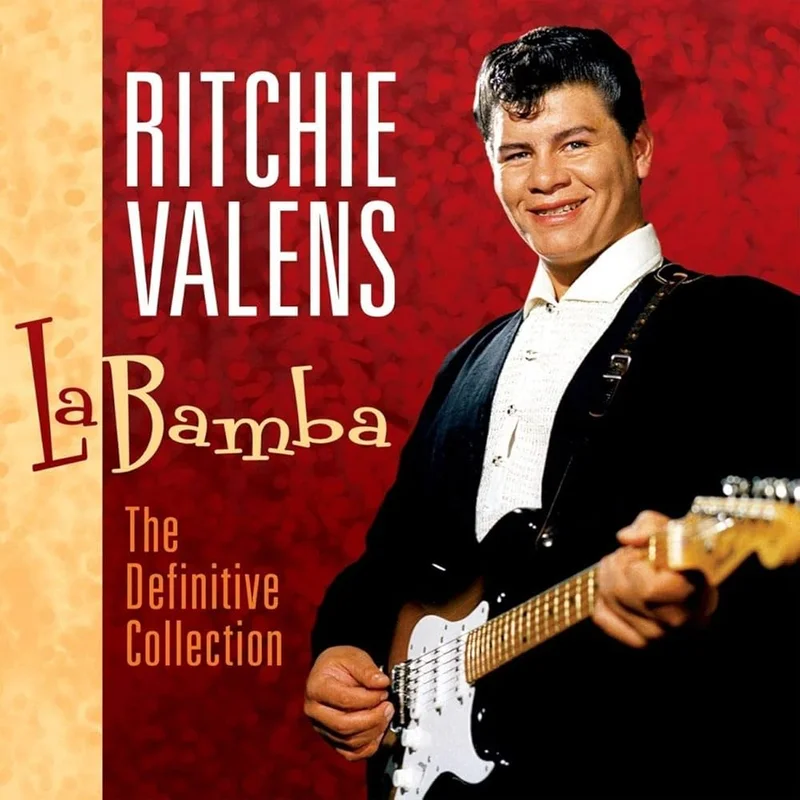
Ritchie Valens
Ritchie Valens
A seventeen-year-old from Pacoima turned a Mexican folk song into rock and roll immortality.
Para bailar la bamba
Para bailar la bamba se necesita una poca de gracia
Una poca de gracia pa mí, pa ti, arriba y arriba
Y arriba y arriba, por ti seré
Por ti seré, por ti seré
Yo no soy marinero
Yo no soy marinero, soy capitán
Soy capitán, soy capitán
Bamba, bamba
Bamba, bamba
Bamba, bamba, va
Para bailar la bamba
Para bailar la bamba se necesita una poca de gracia
Una poca de gracia pa mí, pa ti, arriba y arriba
Para bailar la bamba
Para bailar la bamba se necesita una poca de gracia
Una poca de gracia pa mí, pa ti, arriba y arriba
Y arriba, y arriba, por ti seré
Por ti seré, por ti seré
Bamba, bamba
Bamba, bamba
Bamba, bamba
Para bailar la bamba
Para bailar la bamba se necesita una poca de gracia
Una poca de gracia pa mí, pa ti, arriba y arriba
Y arriba y arriba, por ti seré
Por ti seré, por ti seré
Yo no soy marinero
Yo no soy marinero, soy capitán
Soy capitán, soy capitán
Bamba, bamba
Bamba, bamba
Bamba, bamba, va
Para bailar la bamba
Para bailar la bamba se necesita una poca de gracia
Una poca de gracia pa mí, pa ti, arriba y arriba
Para bailar la bamba
Para bailar la bamba se necesita una poca de gracia
Una poca de gracia pa mí, pa ti, arriba y arriba
Y arriba, y arriba, por ti seré
Por ti seré, por ti seré
Bamba, bamba
Bamba, bamba
Bamba, bamba
“A seventeen-year-old from Pacoima turned a Mexican folk song into rock and roll immortality.”
In the summer of 1958, a shy, left-handed teenager named Richard Steven Valenzuela walked into Gold Star Studios in Hollywood — the same hallowed room where Phil Spector would later conjure his Wall of Sound — and proceeded to bridge two worlds that had never before been so electrifyingly fused.
Ritchie Valens was just seventeen years old, a Mexican-American kid from the San Fernando Valley who had been plucked from a high school auditorium by Del-Fi Records founder Bob Keane.
What happened in that studio session would become one of the most consequential recordings in the history of popular music: a raw, jubilant, two-minute-and-five-second reimagining of a centuries-old Mexican folk song called "La Bamba," transformed into a blistering rock and roll anthem that shattered linguistic barriers and redrew the map of American popular culture.
The production, overseen by Keane, is a masterclass in controlled chaos.
Built on a deceptively simple three-chord progression in C major — C, F, G — the arrangement draws its kinetic power from the son jarocho tradition of Veracruz, Mexico, where "La Bamba" had been performed at weddings and celebrations for generations.
Valens's electric guitar drives the track with a bright, insistent rhythm, while the session musicians lock into a groove that splits the difference between a traditional huapango and the propulsive backbeat of American rock and roll.
The tempo sits at a spirited 120 BPM, energetic enough to fill a dance floor but measured enough to let the vocal melody breathe.
There are no studio tricks here, no overdubs to speak of — just the visceral immediacy of a young artist channeling pure joy through a crackling amplifier.
The recording captures a remarkable paradox: Valens, who spoke only limited Spanish, sang the lyrics with such conviction and rhythmic precision that he made the song feel as natural as breathing.
Lyrically, "La Bamba" is an invitation — a call to the dance floor wrapped in playful metaphor and ascending exuberance.
"Para bailar la bamba se necesita una poca de gracia" — to dance the bamba, one needs a little grace — is both a literal instruction and a philosophical statement about the transformative power of music and movement.
The repeated "arriba y arriba" (higher and higher) creates a spiraling sense of elevation, as if the song itself is climbing toward some ecstatic peak.
And then there is the defiant declaration at the song's heart: "Yo no soy marinero, soy capitán" — I am not a sailor, I am a captain.
In the context of the original folk tradition, this was a boast of romantic prowess, but in Valens's mouth it becomes something more: a young man's assertion of identity, of agency, of his right to command his own destiny.
For a Mexican-American teenager navigating the overwhelmingly white landscape of 1950s rock and roll, those words carried a weight that transcended their folk origins.
Released as the B-side to "Donna" in late 1958, "La Bamba" was initially considered the lesser track — a novelty, perhaps, a Spanish-language curiosity tucked behind a conventional English-language ballad.
But disc jockeys and listeners thought otherwise.
Both sides of the single climbed the Billboard charts simultaneously, with "La Bamba" reaching number 22 on the Hot 100 — an astonishing achievement for a song performed entirely in Spanish at a time when the American pop mainstream had virtually no room for non-English recordings.
The song made Ritchie Valens the first Latino rock and roll star, a pioneer who proved that the genre's language was universal.
Critics and fellow musicians recognized something seismic in the recording: here was proof that rock and roll's roots ran deeper and wider than anyone had acknowledged, reaching south across the border into the rich musical soil of Latin America.
The tragedy, of course, is that Valens had almost no time to enjoy his triumph.
On February 3, 1959 — the date Don McLean would later immortalize as "The Day the Music Died" — Valens perished alongside Buddy Holly and J.P.
"The Big Bopper" Richardson in a plane crash near Clear Lake, Iowa.
He was seventeen years old.
He had been a professional recording artist for barely eight months.
And yet the reverberations of "La Bamba" have never stopped.
The song was reborn spectacularly in 1987 when Los Lobos recorded a faithful, fiery cover for the biopic of the same name, sending it to number one on the Billboard Hot 100 and introducing Valens's legacy to a new generation.
But the original recording remains the definitive article — a two-minute supernova that announced the arrival of Latino voices in rock and roll, that proved a folk song could become a revolution, and that reminds us, every time the needle drops, that to dance the bamba, all you need is a little grace.