TheRedBaron
Sabaton
The Great War
A thundering power metal requiem for the skies' most feared ace.
Man and machine and nothing there in between
A flying circus and a man from Prussia
The sky and a plane, this man commands his domain
The western front and all the way to Russia
Death from above, you're under fire
Stained red as blood, he's roaming higher
Born a soldier from the horseback to the skies
That's where the legend will arise
And he's flying
Higher, the king of the sky
He's flying too fast and he's flying too high
Higher, an eye for an eye
The legend will never die
First to the scene, he is a lethal machine
It's Bloody April and the tide is turning
Fire at will, it is the thrill of the kill
Four in a day shot down with engines burning
Embrace the fame, red squadron leader
Call out his name, Rote Kampfflieger
In the game to win, a gambler rolls the dice
Eighty allies paid the price
And he's flying
Higher, the king of the sky
He's flying too fast and he's flying too high
Higher, an eye for an eye
The legend will never die
Higher
Higher, the king of the sky
He's flying too fast again, he's flying too high
He's flying higher, an eye for an eye
The legend will never die
Higher
Born a soldier from the horseback to the skies
And the legend never dies
And he's flying
And he's flying
And he's flying
Higher, the king of the sky
He's flying too fast and he's flying too high
Higher, an eye for an eye
The legend will never die
Higher, the king of the sky
He's flying too fast and he's flying too high
Higher, an eye for an eye
The legend will never die
Man and machine and nothing there in between
A flying circus and a man from Prussia
The sky and a plane, this man commands his domain
The western front and all the way to Russia
Death from above, you're under fire
Stained red as blood, he's roaming higher
Born a soldier from the horseback to the skies
That's where the legend will arise
And he's flying
Higher, the king of the sky
He's flying too fast and he's flying too high
Higher, an eye for an eye
The legend will never die
First to the scene, he is a lethal machine
It's Bloody April and the tide is turning
Fire at will, it is the thrill of the kill
Four in a day shot down with engines burning
Embrace the fame, red squadron leader
Call out his name, Rote Kampfflieger
In the game to win, a gambler rolls the dice
Eighty allies paid the price
And he's flying
Higher, the king of the sky
He's flying too fast and he's flying too high
Higher, an eye for an eye
The legend will never die
Higher
Higher, the king of the sky
He's flying too fast again, he's flying too high
He's flying higher, an eye for an eye
The legend will never die
Higher
Born a soldier from the horseback to the skies
And the legend never dies
And he's flying
And he's flying
And he's flying
Higher, the king of the sky
He's flying too fast and he's flying too high
Higher, an eye for an eye
The legend will never die
Higher, the king of the sky
He's flying too fast and he's flying too high
Higher, an eye for an eye
The legend will never die
“A thundering power metal requiem for the skies' most feared ace.”
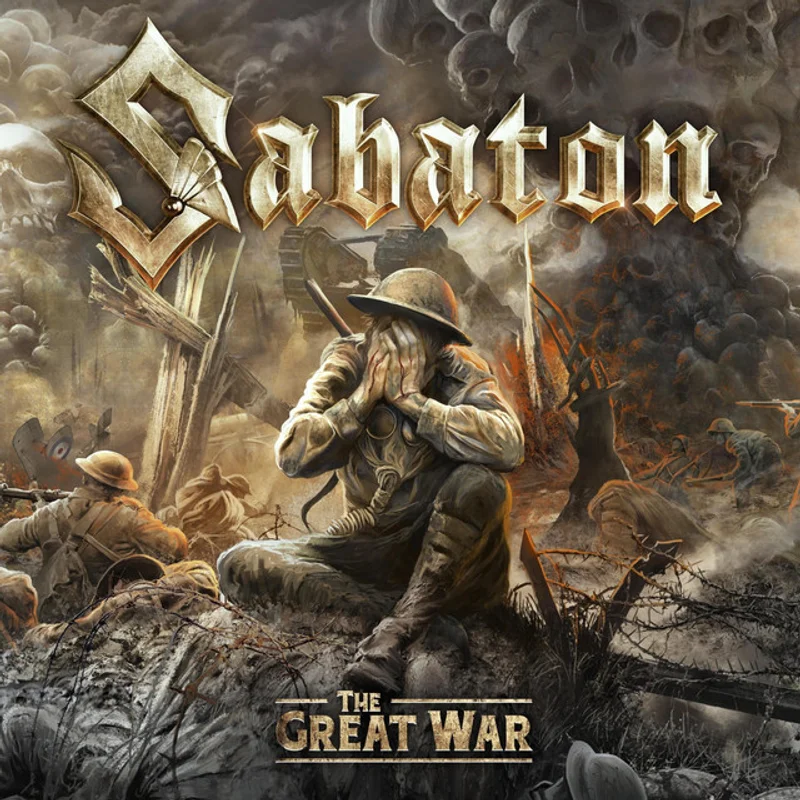
In the years leading up to the centennial of World War I's conclusion, Swedish power metal historians Sabaton embarked on their most ambitious conceptual undertaking yet.
'The Great War,' released on July 19, 2019 — exactly one hundred years after the post-war London Victory Parade — was the band's ninth studio album and a meticulous chronicle of the conflict that reshaped the modern world.
'The Red Baron' emerged as the album's crown jewel, a track devoted to Manfred Albrecht Freiherr von Richthofen, the Prussian aristocrat turned legendary fighter pilot whose crimson Fokker triplane became the most feared silhouette on the Western Front.
Bassist Pär Sundström and vocalist Joakim Brodén, the band's principal songwriters, spent years researching primary sources, visiting battlefields, and collaborating with historians from the Great War Channel on YouTube.
The album was recorded at Black Lounge Studios in Avesta, Sweden, with longtime collaborator Jonas Kjellgren engineering, while the band also enlisted producer and mixer Jonas Kjellgren alongside additional orchestral arrangements that would lend the record its cinematic grandeur.
Musically, 'The Red Baron' is a masterclass in controlled ferocity.
Locked into D minor at a relentless 133 BPM, the track opens with a galloping dual-guitar assault from Chris Rörland and Tommy Johansson, their harmonized riffs evoking the roar of rotary engines and the whistle of wind through biplane struts.
The energy rating of 0.94 is no abstraction — every element of the production is calibrated for maximum kinetic impact.
Hannes Van Dahl's double-bass drumming provides a mechanized heartbeat beneath the arrangement, while layered orchestral synths swell during the chorus to create a sense of aerial vastness.
The low valence score of 0.30 reveals the song's emotional underbelly: for all its bombast, this is music steeped in death and melancholy.
The key of D minor — historically associated with requiems and lamentations from Mozart to Beethoven — anchors the triumphant melodies in an unmistakable darkness.
Brodén's vocal delivery oscillates between commanding declaration and something approaching reverence, as though narrating a myth he knows ends in tragedy.
Lyrically, the song traces Richthofen's arc from Prussian cavalry officer to airborne legend with an economy that borders on the mythic.
The opening couplet — 'Man and machine and nothing there in between' — immediately collapses the distinction between pilot and aircraft, establishing the Red Baron not merely as a soldier but as a centaur of the industrial age.
References to 'Bloody April' of 1917, when Richthofen's Jasta 11 squadron devastated the Royal Flying Corps, ground the narrative in historical specificity, while the invocation of the German title 'Rote Kampfflieger' (Red Battle Flyer) pays homage to Richthofen's own 1917 autobiography.
The recurring chorus — 'He's flying too fast and he's flying too high' — functions as both celebration and foreshadowing, an Icarus motif embedded within the martial triumph.
The line 'Eighty allies paid the price' refers to Richthofen's confirmed eighty aerial victories, the highest tally of any pilot in the war.
Yet the emotional arc bends toward elegy: the insistent repetition of 'the legend will never die' acknowledges that the man himself very much did, shot down over the Somme on April 21, 1918, at just twenty-five years old.
The reception of 'The Red Baron' and its parent album confirmed Sabaton's ascent from niche power metal curiosity to genuine cultural phenomenon.
'The Great War' debuted at number one in eleven countries, including Sweden, Germany, Switzerland, and Austria, and cracked the top forty in the United States — a remarkable feat for a European metal act singing about century-old conflicts.
'The Red Baron' became an immediate fan favorite and live staple, its chorus inspiring mass singalongs at festivals from Wacken Open Air to Sabaton Open Air, the band's own annual festival in Falun, Sweden.
The track also became a viral sensation on YouTube and social media, with history educators and military enthusiasts praising its accuracy and accessibility.
Sabaton's parallel venture, the Sabaton History Channel on YouTube — co-hosted by historian Indy Neidell — devoted an episode to the Red Baron that garnered millions of views, blurring the line between entertainment and education in ways few metal bands have ever attempted.
The legacy of 'The Red Baron' extends beyond chart positions and streaming numbers.
It represents the apotheosis of Sabaton's singular mission: to make history viscerally felt through the medium of heavy metal.
In a genre often criticized for escapism, Sabaton insists on confrontation with real human stories — courage, hubris, sacrifice, and the terrible machinery of war.
The track has been embraced by aviation museums, history teachers, and a generation of listeners for whom the First World War might otherwise remain an abstraction buried in textbooks.
It stands alongside 'Bismarck,' 'Ghost Division,' and 'Carolus Rex' as one of the defining entries in the Sabaton canon, a song that transforms a century-old fighter ace into something eternal.
In D minor's mournful key, at a tempo that mimics a racing pulse, 'The Red Baron' achieves what the best historical art always does: it makes the dead feel alive, and reminds the living what was lost.