ToHellandBack
Sabaton
Heroes
A power metal monument to the most decorated soldier in American history.
A short man from Texas, a man of the wild
Thrown into combat, where bodies lie piled
Hides his emotions, his blood's running cold
Just like his victories, his story unfolds
Bright, a white light
If there'd be any glory in war
Let it rest on men like him
(Dead men will never come back)
Crosses grow on Anzio
Where no soldier sleeps and where hell's six feet deep
That death does wait, there's no debate
So charge and attack, going to hell and back
A man of the 15th, a man of can do
Friends fall around him, and yet he came through
Let them fall face down if they must die
Making it easier to say goodbye
Bright, a white light
If there'd be any glory in war
Let it rest on men like him
Who went to hell and came back
Crosses grow on Anzio
Where no soldier sleeps and where hell's six feet deep
That death does wait, there's no debate
So charge and attack, going to hell and back
Oh, gather 'round me and listen while I speak
Of a war where hell is six feet deep
And all along the shore where cannons still roar
They're haunting my dreams, they're still there when I sleep
He saw crosses grow on Anzio
Where no soldier sleeps and where hell's six feet deep
That death does wait, there's no debate
He charged and attacked, he went to hell and back
A short man from Texas, a man of the wild
Thrown into combat, where bodies lie piled
Hides his emotions, his blood's running cold
Just like his victories, his story unfolds
Bright, a white light
If there'd be any glory in war
Let it rest on men like him
(Dead men will never come back)
Crosses grow on Anzio
Where no soldier sleeps and where hell's six feet deep
That death does wait, there's no debate
So charge and attack, going to hell and back
A man of the 15th, a man of can do
Friends fall around him, and yet he came through
Let them fall face down if they must die
Making it easier to say goodbye
Bright, a white light
If there'd be any glory in war
Let it rest on men like him
Who went to hell and came back
Crosses grow on Anzio
Where no soldier sleeps and where hell's six feet deep
That death does wait, there's no debate
So charge and attack, going to hell and back
Oh, gather 'round me and listen while I speak
Of a war where hell is six feet deep
And all along the shore where cannons still roar
They're haunting my dreams, they're still there when I sleep
He saw crosses grow on Anzio
Where no soldier sleeps and where hell's six feet deep
That death does wait, there's no debate
He charged and attacked, he went to hell and back
“A power metal monument to the most decorated soldier in American history.”
In the annals of World War II, few stories burn with the improbable ferocity of Audie Leon Murphy — a scrawny, baby-faced orphan from Kingston, Texas, who stood barely five feet five inches tall and was initially rejected by the Marines and the paratroopers for being too small.
By war's end, he had earned every military combat award for valor available from the United States Army, as well as decorations from France and Belgium, making him the most decorated American combat soldier of the Second World War.
It was this extraordinary life that Sabaton's principal songwriters Joakim Brodén and Pär Sundström seized upon when crafting "To Hell and Back" for their seventh studio album, "Heroes" (2014).
The album was conceived as a concept record dedicated to individual acts of heroism during the World Wars, and Murphy's saga — equal parts myth and nightmare — became its emotional centerpiece.
Brodén has spoken in interviews about the months of research that went into each track, poring over military histories, memoirs, and Murphy's own 1949 autobiography (also titled "To Hell and Back") to ensure the lyrics honored the human being behind the legend.
Recorded at Black Lounge Studios in Avesta, Sweden, with additional production work handled at Abyss Studios under the watchful ear of longtime collaborator Peter Tägtgren, the track is a masterclass in controlled sonic fury.
The key of D minor — historically the key of requiems, of Mozart's darkest mass, of Beethoven's Ninth before its triumphant turn — anchors the song in a gravity befitting its subject matter.
At 133 BPM, the tempo sits in that precise sweet spot where power metal's galloping double-bass drums evoke both the urgency of a battlefield charge and the relentless march of memory.
The energy rating of 0.94 is no accident: layered rhythm guitars churn beneath Brodén's baritone like tank treads grinding through Italian mud, while Chris Rörland's lead guitar lines pierce through the mix like tracer fire.
Hannes Van Dahl's drumming is metronomic yet thunderous, and the orchestral synth pads that swell beneath the chorus lend the track an almost cinematic grandeur — as though John Williams were scoring a metal opera.
Yet the valence sits at a strikingly low 0.30, a numerical confirmation of what the ear already knows: for all its bombast, this is music drenched in sorrow.
Lyrically, "To Hell and Back" operates on a dual register that elevates it far above simple hero-worship.
The opening couplet — "A short man from Texas, a man of the wild / Thrown into combat, where bodies lie piled" — immediately grounds the mythic in the physical: Murphy's slight stature, his rural poverty, the obscene reality of corpses stacked like cordwood.
The recurring image of crosses growing on Anzio is devastatingly precise; the Allied landings at Anzio in January 1944 devolved into a months-long bloodbath, and the American cemetery there holds 7,861 graves arranged in sweeping arcs across manicured grass.
"Where no soldier sleeps and where hell's six feet deep" collapses the distance between a burial plot and the trenches themselves — the grave is the foxhole, the foxhole is the grave.
The bridge section shifts to first person, as though Murphy's ghost has seized the microphone: "Oh, gather 'round me and listen while I speak." This is the voice of the veteran haunted by what he survived, the man who after the war suffered crippling PTSD (then called "battle fatigue"), slept with a loaded pistol under his pillow, and became one of the first public figures to speak openly about combat trauma.
Brodén's decision to let the song's final chorus shift from second to third person — "He charged and attacked, he went to hell and back" — transforms the listener from participant to witness, from soldier to historian, completing the song's arc from visceral experience to solemn remembrance.
Released on May 16, 2014, "Heroes" debuted at number one in Sweden and charted across Europe, with "To Hell and Back" quickly becoming one of its most streamed and requested tracks.
Critics praised the album for its meticulous research and emotional sincerity, qualities that set Sabaton apart in a genre sometimes dismissed as cartoonish.
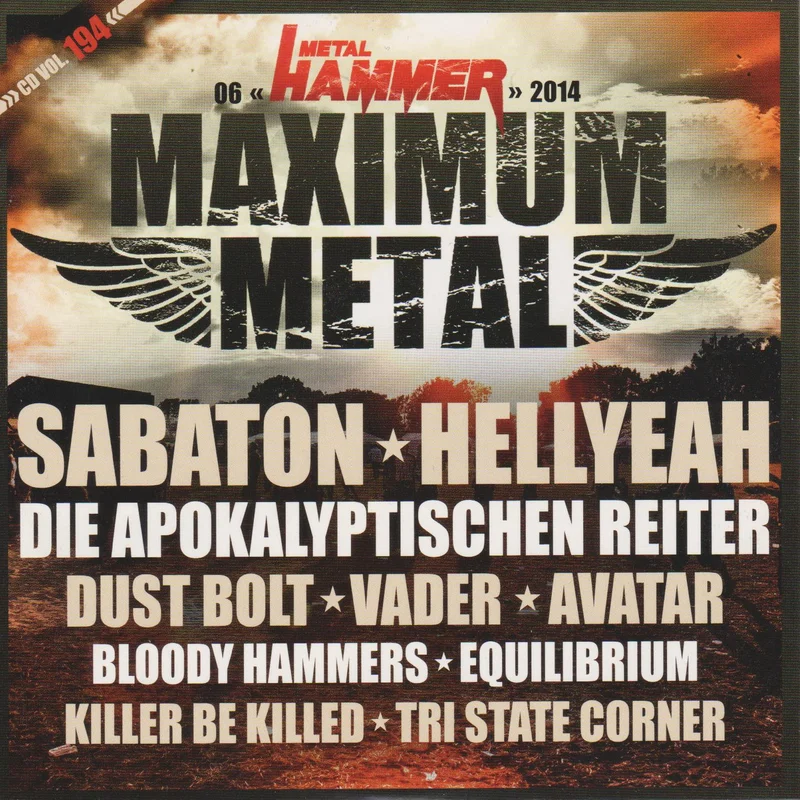
Metal Hammer awarded "Heroes" four out of five stars, singling out the album's ability to humanize history without sanitizing it.
The track resonated powerfully on YouTube, where lyric videos and history-focused fan analyses accumulated tens of millions of views, aided by Sabaton's partnership with the history-education channel Sabaton History, hosted by Brodén and historian Indy Neidell.
The song became a gateway drug for a generation of listeners who discovered military history through metal — a cultural phenomenon that earned the band invitations to perform at military museums, veterans' commemorations, and even the Swedish Armed Forces' own events.
"To Hell and Back" endures because it occupies a rare intersection: it is simultaneously a three-and-a-half-minute adrenaline rush and a meditation on the psychic cost of survival.
In Sabaton's catalog, it stands alongside "Primo Victoria" and "The Last Stand" as a defining statement — proof that power metal's maximalism can serve not just spectacle but substance.
Audie Murphy died in a plane crash in 1971 at the age of 45, his body broken by old wounds and his mind scarred by memories that never faded.
He was buried with full military honors at Arlington National Cemetery, his headstone deliberately modest at his own request.
Sabaton's tribute ensures that his story — not just his medals, but his suffering, his humanity, his refusal to let his fallen friends be forgotten — continues to echo, carried on walls of distortion and the roar of ten thousand voices singing in unison at festivals from Wacken to Woodlands.
The crosses still grow on Anzio.
And thanks to this song, we still count them.