TheSoundofSilence
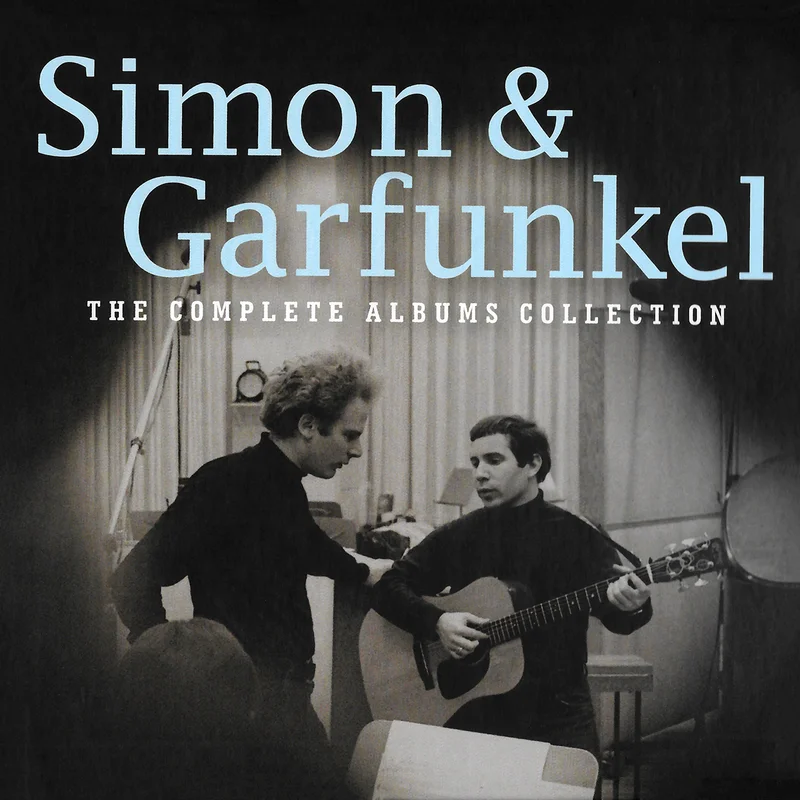
Simon & Garfunkel
The Singer
A prophetic hymn to alienation that turned silence itself into a scream.
Hello darkness, my old friend
I've come to talk with you again
Because a vision softly creeping
Left its seeds while I was sleeping
And the vision that was planted in my brain
Still remains
Within the sound of silence
In restless dreams, I walked alone
Narrow streets of cobblestone
'Neath the halo of a streetlamp
I turned my collar to the cold and damp
When my eyes were stabbed by the flash of a neon light
That split the night
And touched the sound of silence
And in the naked light, I saw
Ten thousand people, maybe more
People talking without speaking
People hearing without listening
People writing songs that voices never shared
No one dared
Disturb the sound of silence
"Fools", said I, "You do not know
Silence like a cancer grows
Hear my words that I might teach you
Take my arms that I might reach you"
But my words like silent raindrops fell
And echoed in the wells of silence
And the people bowed and prayed
To the neon god they made
And the sign flashed out its warning
In the words that it was forming
And the sign said, "The words of the prophets are written on the subway walls
In tenement halls"
And whispered in the sounds of silence
Hello darkness, my old friend
I've come to talk with you again
Because a vision softly creeping
Left its seeds while I was sleeping
And the vision that was planted in my brain
Still remains
Within the sound of silence
In restless dreams, I walked alone
Narrow streets of cobblestone
'Neath the halo of a streetlamp
I turned my collar to the cold and damp
When my eyes were stabbed by the flash of a neon light
That split the night
And touched the sound of silence
And in the naked light, I saw
Ten thousand people, maybe more
People talking without speaking
People hearing without listening
People writing songs that voices never shared
No one dared
Disturb the sound of silence
"Fools", said I, "You do not know
Silence like a cancer grows
Hear my words that I might teach you
Take my arms that I might reach you"
But my words like silent raindrops fell
And echoed in the wells of silence
And the people bowed and prayed
To the neon god they made
And the sign flashed out its warning
In the words that it was forming
And the sign said, "The words of the prophets are written on the subway walls
In tenement halls"
And whispered in the sounds of silence
“A prophetic hymn to alienation that turned silence itself into a scream.”
In the bathroom of his family's home in Flushing, Queens, a twenty-one-year-old Paul Simon sat in the dark with the faucet running, picking out chords on his acoustic guitar.
It was February 1964 — the month the Beatles landed on American shores and rewrote the rules of popular music — but Simon was chasing a different sound entirely.
Haunted by the assassination of President Kennedy just months earlier, and steeped in the existentialist literature he'd devoured at Queens College, he composed "The Sound of Silence" in fragments, sometimes turning off the lights to find the mood he was after.
The darkness was not merely metaphorical; Simon literally sought sensory deprivation to access the emotional frequency of isolation and prophetic urgency that the song demanded.
He brought the finished composition to his partner Art Garfunkel, whose ethereal tenor would become the song's most recognizable instrument, and together they laid down an austere, acoustic version for their debut album *Wednesday Morning, 3 A.M.*, recorded at Columbia Studios in New York on March 10, 1964, under the watchful ear of producer Tom Wilson.
The original recording was a study in restraint — two voices, one nylon-string guitar, and the vast, cathedral-like reverb of Columbia's Studio A.
Simon's fingerpicking pattern, rooted in the folk tradition of artists like Mississippi John Hurt, moved with a deliberate, almost processional gravity.
Garfunkel's harmony floated above Simon's lead vocal like a ghost of conscience, their voices locking into intervals that felt ancient and inevitable.
But the version most of the world came to know was something else entirely.
After the duo's debut album flopped and they effectively split — Simon decamping to England, Garfunkel returning to graduate school — producer Tom Wilson, inspired by the electrified folk-rock sound of the Byrds and Bob Dylan's "Subterranean Homesick Blues," made a fateful decision without consulting either artist.
He overdubbed electric guitar, bass, and drums onto the original acoustic track, grafting a rock-and-roll pulse onto Simon's contemplative skeleton.
The result, released as a single in September 1965, possessed a strange, almost spectral energy — the intimacy of the original vocal performance now surrounded by an electric shimmer that felt both urgent and otherworldly.
At 114 BPM in the key of C major, the song occupies an unusual emotional territory: the major key suggests openness and clarity, yet the lyrical content is steeped in alienation, creating a tension that makes the listening experience feel like waking from a vivid, unsettling dream.
Lyrically, "The Sound of Silence" is a masterwork of sustained metaphor, a young writer's audacious attempt to dramatize the failure of human communication in the modern age.
The opening address — "Hello darkness, my old friend" — immediately establishes the narrator's paradoxical comfort with isolation, as though silence and shadow have become more reliable companions than any human being.
The "vision softly creeping" that plants its seeds during sleep suggests both prophetic revelation and the insidious spread of disconnection, a cancer of the spirit that grows precisely because no one acknowledges it.
As the narrator wanders cobblestone streets beneath the "halo of a streetlamp" — a word choice that imbues urban desolation with false sanctity — he encounters the central horror of the song: ten thousand people "talking without speaking, hearing without listening, writing songs that voices never shared." This is not mere loneliness; it is a civilization-wide aphasia, a collective inability to transmit meaning.
The narrator's attempt to break through — "Hear my words that I might teach you, take my arms that I might reach you" — fails utterly, his words falling "like silent raindrops" into wells of silence.
The final image of people bowing to a "neon god" while prophetic truth is scrawled on subway walls and in tenement halls inverts every hierarchy of sacred and profane, suggesting that authentic wisdom has been exiled to the margins while society worships the flickering, commercial glow of its own distraction.
The cultural reception of "The Sound of Silence" is one of popular music's great reversal stories.
The acoustic original, buried on a failed album in 1964, seemed destined for obscurity.
But when Tom Wilson's overdubbed version hit radio in the fall of 1965, it detonated.
By January 1, 1966, it sat atop the Billboard Hot 100, knocking the Beatles from the number-one position — a symbolic coronation for a song that owed nothing to Merseybeat optimism.
The single's success was so sudden and overwhelming that Simon, then living in London and performing in folk clubs, learned of his own hit from a transatlantic phone call and rushed back to the States to reunite with Garfunkel.
The song became an anthem for a generation beginning to feel the tremors of Vietnam, civil rights upheaval, and a growing distrust of institutional authority.
Critics recognized it as something more than a folk-rock hit; it was a philosophical statement disguised as a pop single, and it announced Paul Simon as one of the most literate songwriters of his era.
Its inclusion in Mike Nichols' 1967 film *The Graduate* cemented its status as a generational touchstone, its themes of alienation and spiritual emptiness mapping perfectly onto Benjamin Braddock's existential drift.
Nearly six decades later, "The Sound of Silence" endures not as a relic but as a living document, its warnings about communicative failure and technological idolatry more resonant in the age of smartphones and social media than they were in the age of neon signs.
The song has been covered hundreds of times — most notably by the metal band Disturbed, whose 2015 version introduced it to an entirely new audience and earned a stunned, tearful reaction from Art Garfunkel himself.
It has soundtracked films, television series, memes, and moments of collective mourning, its opening couplet so deeply embedded in the cultural lexicon that it functions almost as a secular prayer.
Within Simon & Garfunkel's catalog, it remains the foundational text — the song that made everything else possible, from *Parsley, Sage, Rosemary and Thyme* to *Bridge Over Troubled Water*.
But beyond its place in any discography, "The Sound of Silence" persists because it names something we all recognize and few can articulate: the terrifying ease with which human beings can exist side by side in perfect, impenetrable solitude.
It is a song about the void, and the void, as it turns out, has excellent acoustics.