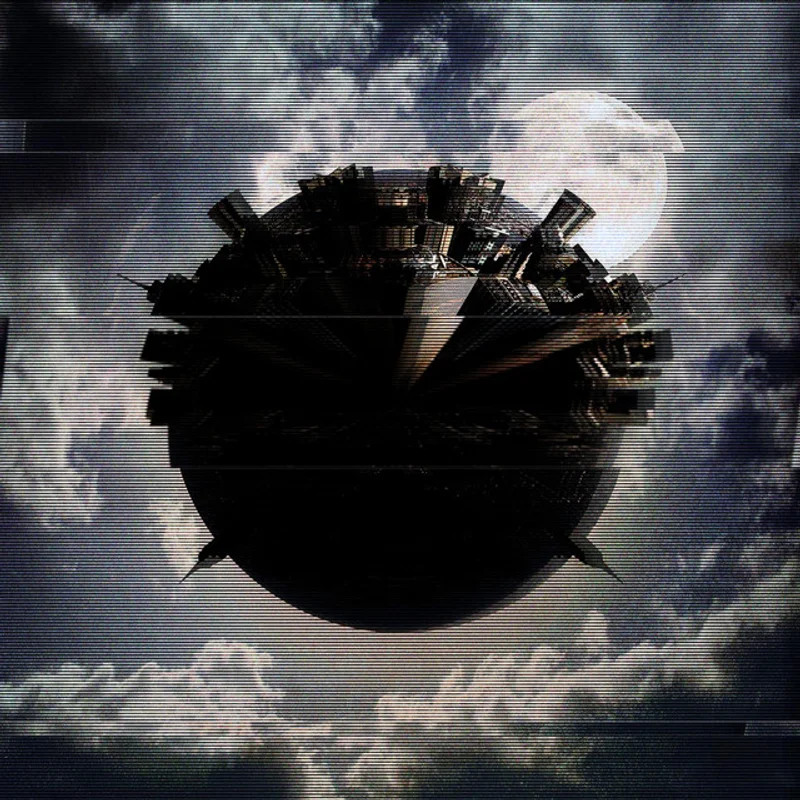
Quorra
Spiffy Man
Retrograde
A luminous instrumental odyssey where digital dreams pulse in perfect C major symmetry.
“A luminous instrumental odyssey where digital dreams pulse in perfect C major symmetry.”
The genesis of "Quorra" traces back to a period of creative isolation for Spiffy Man, who found himself captivated by the intersection of humanity and technology — a fascination crystallized by repeated late-night viewings of science fiction cinema.
The track's title, an unmistakable nod to the digitally-born character from Tron: Legacy, became a vessel for exploring what it means to feel alive inside synthetic landscapes.
Recording sessions took place in Spiffy Man's home studio during the production of the broader "Retrograde" album, a project defined by its backward-looking gaze at futurism itself — retrofuturism rendered in waveforms and voltage.
Musically, "Quorra" is a masterclass in restraint and balance.
Locked at 120 BPM — the universal heartbeat of electronic music — it neither rushes nor lingers, instead occupying a meditative middle ground between dancefloor propulsion and ambient drift.
The choice of C major, the most unadorned and transparent of keys, lends the composition an openness, a blank-canvas clarity upon which Spiffy Man layers shimmering synthesizer arpeggios, warm sub-bass undertones, and crystalline pad textures.
The energy and valence both hover at a precise midpoint, creating a rare emotional neutrality — neither euphoric nor melancholic, but something more elusive: a state of digital contemplation.
As a purely instrumental piece, "Quorra" communicates entirely through timbre, rhythm, and harmonic motion.
Where lyrics might anchor meaning, their absence here becomes the meaning itself — a deliberate evocation of a being who exists beyond language, who feels without the vocabulary to name those feelings.
The melodic phrases rise and dissolve like thoughts forming at the edge of consciousness.
There is an emotional arc, but it speaks in the tongue of synthesis: tension builds through filter sweeps and layered voices, resolution arrives in the return to root-note simplicity.
It is a portrait painted in frequencies.
Within the electronic music landscape, "Quorra" arrived as part of the broader synthwave and retrowave resurgence that defined the mid-2010s, yet it distinguished itself through its philosophical restraint.
Where many contemporaries leaned into nostalgia as pure aesthetic — all neon and chrome — Spiffy Man used the sonic vocabulary of the past to ask quieter questions about identity and existence.
The track found devoted listeners in online communities dedicated to focus music, late-night driving playlists, and science fiction fandom, accumulating streams steadily rather than explosively, building the kind of slow-burn reputation that outlasts trends.
The cultural reception of "Quorra" extended beyond passive listening.
It became a favorite among content creators, finding placement in countless video essays about technology, AI, and digital art.
Its emotional ambiguity made it endlessly adaptable — equally effective underscoring moments of wonder and moments of unease.
Critics who covered "Retrograde" frequently singled out the track as the album's emotional fulcrum, the still point around which more kinetic compositions orbited.
Today, "Quorra" endures as one of Spiffy Man's defining statements — proof that instrumental electronic music can achieve the narrative depth and emotional specificity typically reserved for lyric-driven work.
It occupies a singular space in the artist's catalog: simultaneously the most accessible and most enigmatic track on "Retrograde." In broader music history, it stands as a testament to the power of restraint, a reminder that sometimes the most profound thing a song can do is create space for the listener to project their own consciousness into its architecture.
Like its namesake, "Quorra" is something born of code that somehow, inexplicably, breathes.