Song2-2012Remaster
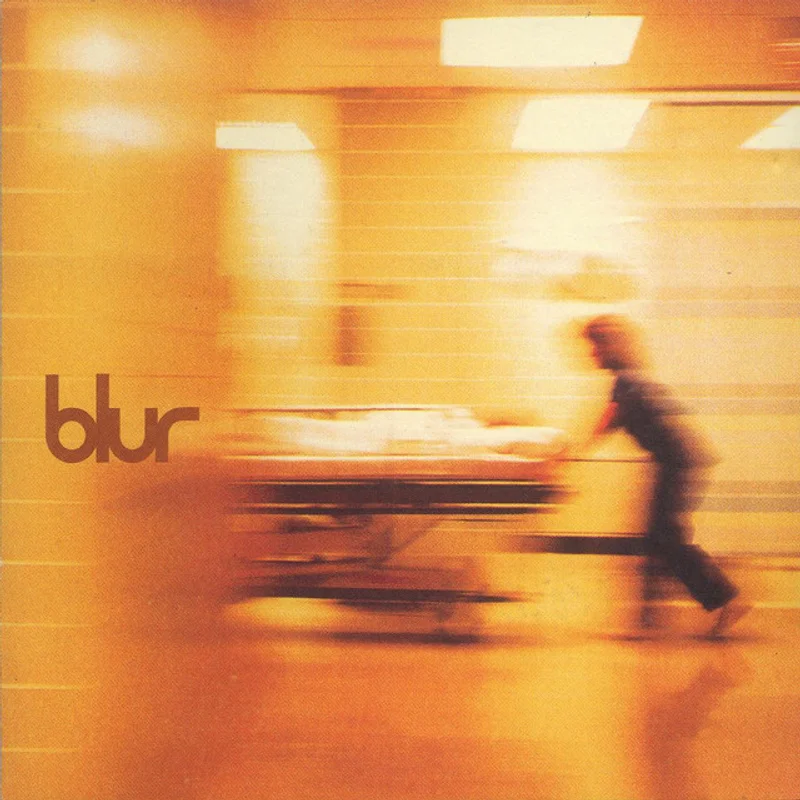
Blur
Blur (Special Edition)
Two minutes and two seconds that detonated Britpop and rebuilt it as something feral.
Wooooo hoooo
Wooooo hoooo
Wooooo hoooo
Wooooo hoooo
I got my head checked
By a jumbo jet
It wasn't easy
But nothing is
No
Wooooo hooooooo
When I feel heavy metal
Wooooo hooooooo
And I'm pins and I'm needles
Wooooo hooooooo
Well, I lie and I'm easy
All of the time, but I am never sure
Why I need you
Pleased to meet you
I got my head down
When I was young
It's not my problem
It's not my problem
Wooooo hooooooo
When I feel heavy metal
Wooooo hooooooo
And I'm pins and I'm needles
Wooooo hooooooo
Well, I lie and I'm easy
All of the time but I am never sure
Why I need you
Pleased to meet you
Yeah, yeah
Yeah, yeah
Yeah, yeah
Oh, yeah
Wooooo hoooo
Wooooo hoooo
Wooooo hoooo
Wooooo hoooo
I got my head checked
By a jumbo jet
It wasn't easy
But nothing is
No
Wooooo hooooooo
When I feel heavy metal
Wooooo hooooooo
And I'm pins and I'm needles
Wooooo hooooooo
Well, I lie and I'm easy
All of the time, but I am never sure
Why I need you
Pleased to meet you
I got my head down
When I was young
It's not my problem
It's not my problem
Wooooo hooooooo
When I feel heavy metal
Wooooo hooooooo
And I'm pins and I'm needles
Wooooo hooooooo
Well, I lie and I'm easy
All of the time but I am never sure
Why I need you
Pleased to meet you
Yeah, yeah
Yeah, yeah
Yeah, yeah
Oh, yeah
“Two minutes and two seconds that detonated Britpop and rebuilt it as something feral.”
In the spring of 1997, Blur were a band at war — not just with Oasis, not just with the press, but with themselves.
The Great Life vs.
Parklife rivalry had calcified them into caricatures of English whimsy, and Damon Albarn, Graham Coxon, Alex James, and Dave Rowntree were desperate to shed their skin.
Coxon, in particular, had been devouring American indie and lo-fi noise rock — Pavement, Sonic Youth, the jagged dissonance of bands who couldn't care less about chart positions.
When the four of them decamped to Mayfair Studios in London with producer Stephen Street to record what would become their self-titled fifth album, the brief was simple and radical: forget everything you think Blur sounds like.
"Song 2" was born not from careful composition but from reckless spontaneity — a throwaway jam that lasted barely a minute in its earliest form, a sarcastic parody of grunge and American alt-rock that the band never expected to become their most recognizable moment.
The production is a masterclass in controlled demolition.
Stephen Street captured the track with an almost punk economy — the quiet-loud-quiet dynamic borrowed shamelessly from the Pixies playbook, but compressed into a duration so brief it feels like a sucker punch.
Coxon's guitar tone is the song's secret weapon: a snarling, distortion-drenched wall achieved through a combination of his Fender Telecaster and a battery of effects pedals, including heavy use of a Pro Co RAT distortion unit.
The verses creep in with a hushed, almost menacing restraint — bass and drums locked in a minimalist groove at 127 BPM in A minor — before the chorus detonates with that immortal "Woo-hoo!" The mix is deliberately raw and unpolished, with Street leaving in the rough edges to preserve the feeling of a band playing in a room, thrashing through an idea before it could be overthought.
The entire recording was reportedly captured in a single afternoon.
Lyrically, "Song 2" operates in a space of deliberate obliqueness, its words less a narrative than a series of dissociative snapshots.
"I got my head checked by a jumbo jet" is a surrealist image of overwhelming force — the sensation of being flattened by something massive and indifferent.
The references to "heavy metal" and "pins and needles" evoke both physical numbness and sonic overload, while "I lie and I'm easy all of the time but I am never sure why I need you" captures a peculiarly modern anxiety: the performance of nonchalance masking genuine confusion and need.
Albarn has suggested the lyrics were partly a satire of the vacuousness he perceived in American grunge — all volume and attitude signifying nothing — yet the irony cuts both ways.
There's a real vulnerability buried beneath the noise, a confession of uncertainty dressed up as a joke.
The repeated "pleased to meet you" carries a whiff of the diabolical, echoing the Rolling Stones' "Sympathy for the Devil," as if the song itself is a Faustian bargain between sincerity and spectacle.
The cultural reception of "Song 2" was a study in beautiful contradictions.
Released as the second single from the album in June 1997, it reached number two on the UK Singles Chart — kept from the top spot, fittingly, by the forces of pop.
But it was in America where the song performed its most unlikely trick.
The very country whose musical idioms Blur were satirizing embraced the track with open arms, sending it to number six on the Billboard Modern Rock chart and making it the band's biggest US hit by a vast margin.
It became inescapable: a fixture on MTV, a staple of alternative radio, and almost immediately, a go-to anthem for sporting events and advertising campaigns.
Critics recognized the album as a bold reinvention, and "Song 2" became its calling card — proof that Blur could be as visceral and immediate as any band on either side of the Atlantic.
The NME and Melody Maker hailed the self-titled record as a creative triumph, and "Song 2" won an NME Award for Best Single.
The legacy of "Song 2" extends far beyond its chart positions or critical plaudits.
It has become one of those rare songs that transcends its genre, its era, and even its own band's discography to exist as a piece of pure, universal sonic adrenaline.
The "Woo-hoo!" hook has been licensed hundreds of times — for football stadiums, video games, television commercials, and Hollywood films — becoming a Pavlovian trigger for excitement itself.
Yet what makes the song endure is its paradox: it was written as a joke, a tossed-off critique of empty noise, and it became the most joyously noisy two minutes of the 1990s.
It proved that Blur were far more than Britpop also-rans trading on English charm; they were fearless shape-shifters capable of reinvention on a dime.
In the broader history of British rock, "Song 2" stands as a hinge point — the moment when the insular parochialism of mid-'90s guitar pop cracked open to let the world rush in.
Twenty-five years on, it still hits like a jumbo jet to the skull, and we still can't help but scream along.