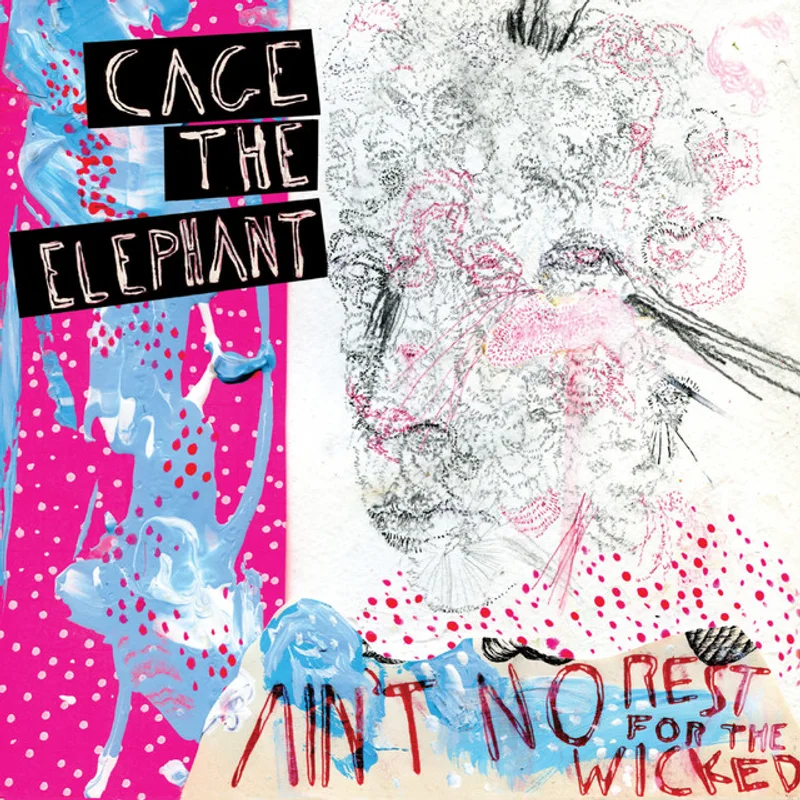
Ain'tNoRestfortheWicked
Cage The Elephant
Cage The Elephant (Expanded Edition)
A bluesy parable of desperation, where every sinner shares the same confession.
He was a-
Ya know it
He was a-
I was walking down the street
When out the corner of my eye
I saw a pretty little thing approaching me
She said, I've never seen a man
Who looks so all alone
Uh, could you use a little company?
If you pay the right price
Your evening will be nice
And you can go and send me on my way
I said, "You're such a sweet young thing
Why'd you do this to yourself?"
She looked at me and this is what she said
"Oh, there ain't no rest for the wicked
Money don't grow on trees
I got bills to pay
I got mouths to feed
There ain't nothing in this world for free
I know I can't slow down
I can't hold back
Though you know
I wish I could
Oh, no there ain't no rest for the wicked
Until we close our eyes for good"
Not even 15 minutes later
I'm still walking down the street
When I saw the shadow of a man creep out of sight
And then he swept up from behind
He put a gun up to my head
He made it clear he wasn't looking for a fight
He said, "Give me all you've got
I want your money not your life
But if you try to make a move, I won't think twice"
I told him, "You can have my cash
But first you know I got to ask
What made you want to live this kind of life?"
He said, "There ain't no rest for the wicked
Money don't grow on trees
I got bills to pay
I got mouths to feed
There ain't nothing in this world for free
I know I can't slow down
I can't hold back
Though you know, I wish I could
Oh no there ain't no rest for the wicked
Until we close our eyes for good"
Yeah (You know it)
He was a-
You know it
He was a-
Well, now a couple hours passed
And I was sitting at my house
The day was winding down and coming to an end
And so I turned on the TV
And flipped it over to the news
And what I saw I almost couldn't comprehend
I saw a preacher man in cuffs
He'd taken money from the church
He'd stuffed his bank account with righteous dollar bills
But even still I can't say much
Because I know we're all the same
Oh yes, we all seek out to satisfy those thrills
You know there ain't no rest for the wicked
Money don't grow on trees
We got bills to pay
We got mouths to feed
There ain't nothing in this world for free
I know we can't slow down
We can't hold back, though you know, we wish we could
Oh no, there ain't no rest for the wicked
Until we close our eyes for good
He was a-
Ya know it
He was a-
I was walking down the street
When out the corner of my eye
I saw a pretty little thing approaching me
She said, I've never seen a man
Who looks so all alone
Uh, could you use a little company?
If you pay the right price
Your evening will be nice
And you can go and send me on my way
I said, "You're such a sweet young thing
Why'd you do this to yourself?"
She looked at me and this is what she said
"Oh, there ain't no rest for the wicked
Money don't grow on trees
I got bills to pay
I got mouths to feed
There ain't nothing in this world for free
I know I can't slow down
I can't hold back
Though you know
I wish I could
Oh, no there ain't no rest for the wicked
Until we close our eyes for good"
Not even 15 minutes later
I'm still walking down the street
When I saw the shadow of a man creep out of sight
And then he swept up from behind
He put a gun up to my head
He made it clear he wasn't looking for a fight
He said, "Give me all you've got
I want your money not your life
But if you try to make a move, I won't think twice"
I told him, "You can have my cash
But first you know I got to ask
What made you want to live this kind of life?"
He said, "There ain't no rest for the wicked
Money don't grow on trees
I got bills to pay
I got mouths to feed
There ain't nothing in this world for free
I know I can't slow down
I can't hold back
Though you know, I wish I could
Oh no there ain't no rest for the wicked
Until we close our eyes for good"
Yeah (You know it)
He was a-
You know it
He was a-
Well, now a couple hours passed
And I was sitting at my house
The day was winding down and coming to an end
And so I turned on the TV
And flipped it over to the news
And what I saw I almost couldn't comprehend
I saw a preacher man in cuffs
He'd taken money from the church
He'd stuffed his bank account with righteous dollar bills
But even still I can't say much
Because I know we're all the same
Oh yes, we all seek out to satisfy those thrills
You know there ain't no rest for the wicked
Money don't grow on trees
We got bills to pay
We got mouths to feed
There ain't nothing in this world for free
I know we can't slow down
We can't hold back, though you know, we wish we could
Oh no, there ain't no rest for the wicked
Until we close our eyes for good
“A bluesy parable of desperation, where every sinner shares the same confession.”
In the sweltering summer of 2006, a young Matt Shultz was living in Bowling Green, Kentucky, a place where the humidity clings to you like guilt and the economic anxieties of small-town America are impossible to ignore.
The song arrived almost fully formed — a walking bass line, a whispered confession, a story that unfolded like a short film shot on grainy 16mm.
Shultz, barely into his twenties, had been absorbing the world around him with the keen eye of a born storyteller: the working poor scraping by, the moral compromises people make when the bills pile up, the quiet desperation that hums beneath the surface of polite society.
Cage The Elephant was still a scrappy, unsigned band playing dive bars and house parties, and "Ain't No Rest for the Wicked" was the song that would catapult them from the Kentucky underground into the global consciousness.
The track was recorded with producer Jay Joyce at his Neon Cross Studio in Nashville, a converted church — a detail that feels almost too poetic given the song's final verse about a crooked preacher.
Joyce, known for his raw, analog-leaning approach, captured the band with minimal overdubs, preserving the loose, lived-in energy of their live performances.
Sonically, the track is a masterclass in restrained tension.
Built around a deceptively simple two-chord acoustic guitar riff in C major, the song pulses at a mid-tempo 120 BPM that mirrors the narrator's unhurried stroll down the street.
The production is sparse yet deliberate — a rubbery bass line anchors the groove while a muted electric guitar scratches out rhythmic accents in the background.
The drums are understated, almost jazzy in their restraint, providing a skeletal framework that lets the narrative breathe.
What makes the arrangement so effective is what it withholds: there are no soaring choruses, no explosive guitar solos, no dramatic dynamic shifts.
Instead, Jay Joyce and the band lean into a bluesy, almost spoken-word delivery that owes as much to Beck and The Black Keys as it does to classic Delta blues storytelling.
The energy sits at a perfect midpoint — not quite brooding, not quite celebratory — occupying a liminal space that mirrors the moral ambiguity at the song's core.
Shultz's vocal performance is particularly striking: half-sung, half-spoken, with a wry detachment that suggests someone who has seen too much to be shocked but not enough to stop caring.
Lyrically, "Ain't No Rest for the Wicked" unfolds as a triptych of moral compromise, each vignette escalating in social respectability while maintaining the same underlying motivation.
The first encounter — a sex worker propositioning the narrator — is the most overtly transgressive, yet Shultz frames it with genuine empathy rather than judgment.
The second, a mugger pressing a gun to the narrator's head, raises the stakes to physical danger, yet the narrator's response is not fear but curiosity: "What made you want to live this kind of life?" The third and most devastating vignette involves a preacher embezzling from his congregation, and it's here that the song's thesis crystallizes.
The shift from "I" to "we" in the final chorus is the song's most quietly devastating move — Shultz implicates himself, the listener, all of us, in the same web of desire and necessity.
The recurring refrain, "until we close our eyes for good," carries the weight of a biblical pronouncement, suggesting that the hustle, the compromise, the moral negotiation — it only ends in death.
It's a remarkably mature philosophical statement from a band barely old enough to rent a car.
The song's cultural trajectory is the stuff of indie-rock legend.
Released as the lead single from Cage The Elephant's self-titled debut in 2008, it initially gained traction through an unlikely vector: the video game Borderlands, which used it as its iconic opening theme in 2009.
That placement proved transformative, introducing the song to millions of gamers who might never have encountered a Kentucky alt-rock band otherwise.
The track climbed to number one on Billboard's Hot Modern Rock Tracks chart, a remarkable achievement for a debut single from an unsigned-turned-newly-signed band.
Critics praised its storytelling economy and bluesy swagger, drawing comparisons to artists as diverse as Tom Waits, The White Stripes, and even Randy Newman in its wry, character-driven narrative approach.
The song became ubiquitous on alternative radio and was further boosted by placements in television shows, film trailers, and sporting events, becoming one of those rare tracks that transcends its genre to become part of the broader cultural furniture.
More than fifteen years after its release, "Ain't No Rest for the Wicked" endures as both a defining statement for Cage The Elephant and a timeless meditation on economic anxiety and moral relativism.
In an era of widening inequality and eroding institutional trust, the song's message has only grown more resonant — the preacher stealing from the church feels less like a parable and more like a news headline.
For the band, it established the template for their career: literate, emotionally complex songwriting wrapped in accessible, groove-driven arrangements.
It remains their most-streamed track, their most-requested live song, and the entry point for countless fans who went on to explore the deeper, stranger corners of their catalog.
In the broader landscape of 2000s rock music, it stands as a reminder that sometimes the most powerful statements are made not with volume and fury, but with a quiet walk down the street, an open ear, and the unsettling recognition that we are all, in our own ways, wicked.