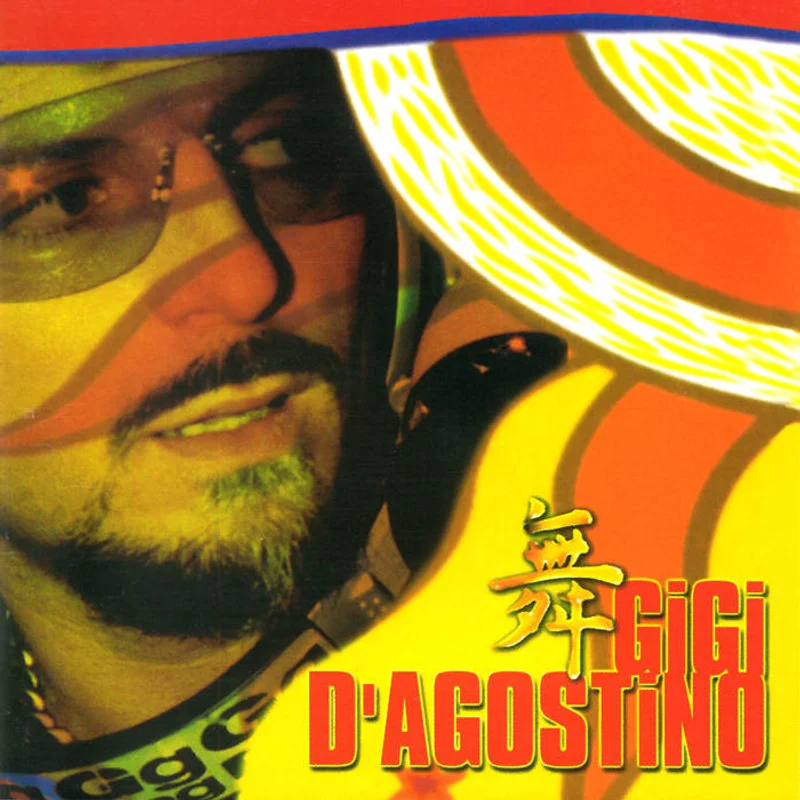
L'amourToujours(SmallMix)
Gigi D'Agostino
L'Amour Toujour
A euphoric hymn of devotion that taught a generation to dream of flight.
I still believe in your eyes
I just don't care what you've done in your life
Baby, I'll always be here by your side
Don't leave me waiting too long, please come by
I, I still believe in your eyes
There is no choice, I belong to your life
Because I will live to love you someday
You'll be my baby and we'll fly away
And I'll fly with you
I'll fly with you
I'll fly with you
Every day and every night
I always dream that you are by my side
Oh, baby, every day and every night
Well, I said everything's gonna be alright
And I'll fly with you
I'll fly with you
I'll fly with you
I still believe in your eyes
I just don't care what you've done in your life
Baby, I'll always be here by your side
Don't leave me waiting too long, please come by
I, I still believe in your eyes
There is no choice, I belong to your life
Because I will live to love you someday
You'll be my baby and we'll fly away
And I'll fly with you
I'll fly with you
I'll fly with you
Every day and every night
I always dream that you are by my side
Oh, baby, every day and every night
Well, I said everything's gonna be alright
And I'll fly with you
I'll fly with you
I'll fly with you
“A euphoric hymn of devotion that taught a generation to dream of flight.”
In the late 1990s, in a modest studio tucked away in Turin, Italy, a quiet, enigmatic producer named Gigi D'Agostino — born Luigino Celestino Di Agostino — was methodically crafting what would become one of the most enduring anthems in the history of electronic dance music.
D'Agostino, already a cult figure in the Italian club scene for his pioneering work in what he called "Lento Violento" and Mediterranean progressive trance, was deep into sessions for his ambitious double-album project, "L'Amour Toujours." Released in 1999, the album was a sprawling, kaleidoscopic love letter to the dancefloor, but it was this track — "L'Amour Toujours" in its radiant "Small Mix" form — that would transcend genre, geography, and time itself.
D'Agostino was reportedly going through a period of intense romantic longing, and the sincerity of that emotion bleeds through every synthesizer pad and vocal hook like light through stained glass.
The production is a masterclass in Italo dance euphoria, built on a foundation of pulsing four-on-the-floor kicks at a buoyant 129 BPM, anchored firmly in the bright, open architecture of C major — a key long associated with purity, innocence, and unbridled joy.
The "Small Mix" strips away some of the extended club-oriented passages of the longer versions, distilling the track to its emotional essence: cascading arpeggiated synths that shimmer like sunlight on the Mediterranean, a pillowy supersaw lead that swells with almost orchestral grandeur, and that unmistakable vocal melody — airy, processed, almost childlike in its simplicity yet devastating in its emotional payload.
D'Agostino's signature production touch is evident in the way he layers crystalline high-end textures over a warm, driving low end, creating a sonic space that feels simultaneously massive and intimate.
The vocal, sung with earnest fragility, is drenched in reverb and subtle pitch correction that gives it an otherworldly, dreamlike quality — less a human voice than the sound of longing itself.
Lyrically, "L'Amour Toujours" operates in the realm of pure, unguarded romanticism.
"I still believe in your eyes / I just don't care what you've done in your life" — the opening couplet establishes a love that is unconditional, almost recklessly so, a devotion that transcends judgment and history.
The recurring motif of flight — "And I'll fly with you" — elevates the song from earthbound romance into something aspirational and metaphysical.
To fly with someone is to escape gravity, to leave behind the mundane and the painful, to exist in a state of shared transcendence.
The lyrical arc moves from patient faith ("Don't leave me waiting too long, please come by") through prophetic certainty ("Because I will live to love you someday") to ecstatic release in the chorus.
It is a song about the sustaining power of belief — belief in another person, belief in the possibility of union, belief that "everything's gonna be alright." In a genre often dismissed for lyrical superficiality, D'Agostino crafted something genuinely poetic in its simplicity.
Upon its release, "L'Amour Toujours" became a continental juggernaut.
It topped charts across Europe, reaching number one in multiple countries and becoming an inescapable presence in clubs, on radio, and at summer festivals from Ibiza to Rimini.
In Italy, it achieved a kind of sacred status, an unofficial national anthem of the dancefloor.
The track charted in France, Germany, Belgium, the Netherlands, and Scandinavia, selling millions of copies and helping to cement Italo dance as a dominant force in late-'90s and early-2000s European pop.
Critics who had previously dismissed Eurodance as disposable confection were forced to reckon with D'Agostino's craftsmanship — the immaculate sound design, the emotional intelligence of the arrangement, the way the track built and released tension with the precision of classical composition.
It became a gateway drug for an entire generation into electronic music.
More than two decades later, "L'Amour Toujours" refuses to fade.
It has been covered, remixed, and sampled countless times, becoming a staple of football stadiums, wedding receptions, and TikTok compilations alike.
Its melody is as recognizable as any pop hook of the last quarter-century, a piece of shared cultural DNA across Europe and increasingly the world.
The track occupies a singular place in D'Agostino's catalog — he has produced hundreds of tracks, many of them brilliant, but this is his "Moonlight Sonata," his "Bohemian Rhapsody," the one that will outlive all context and explanation.
In the broader history of electronic music, it stands as proof that dance music at its best is not escapism but emotional truth delivered at 129 beats per minute — a reminder that the most profound human experiences can be communicated through a synthesizer, a drum machine, and an unshakable belief in love.