ElDiabloLlegoaHabana
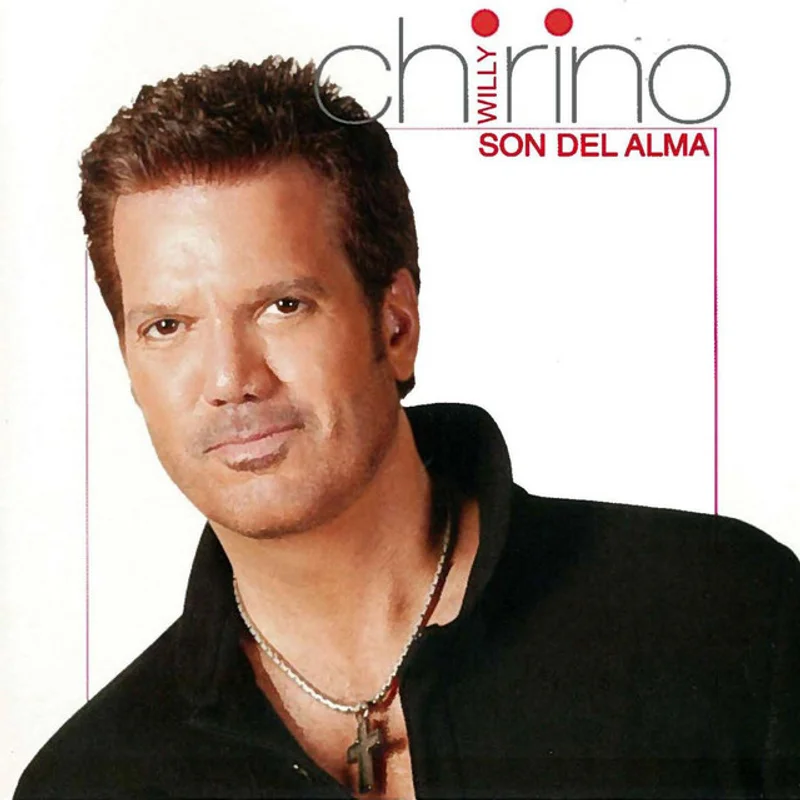
Willy Chirino
Son Del Alma
When the devil danced into Havana, Chirino answered with pure Afro-Cuban fire.
“When the devil danced into Havana, Chirino answered with pure Afro-Cuban fire.”
By the time Willy Chirino sat down to compose "El Diablo Llego a Habana," he had already spent decades as the undisputed architect of Miami's Cuban exile sound — a man who had transformed homesickness into a musical empire.
Born in Consolación del Sur in 1947 and whisked out of Cuba as part of Operation Peter Pan in 1961, Chirino carried the rhythms of his homeland like a phantom limb, always feeling them even when separated by ninety miles of ocean and an eternity of politics.
"Son Del Alma" — literally "Sound of the Soul" — was conceived as a record that would strip away the glossy pop veneer of his earlier work and reconnect with the deep roots of son cubano, rumba, and the sacred percussion traditions of Afro-Cuban religion.
"El Diablo Llego a Habana" emerged as the album's most audacious instrumental statement: a track that needed no words to tell its story of spiritual confrontation and cultural survival.
The recording sessions took place primarily at Crescent Moon Studios in Miami, the legendary facility owned by Emilio Estefan, who served as a guiding force behind the album's production.
Chirino assembled a murderer's row of session musicians — many of them fellow exiles, others recruited from the vibrant Latin music scenes of Miami and New York.
The sonic palette of "El Diablo Llego a Habana" is built on a foundation of tumbling congas, shekeres, and batá drums that evoke the toques de santo of Santería ceremony, layered beneath bright horn arrangements that nod to the golden age of Cuban big bands.
At 120 BPM, the track occupies a deliberate middle ground — not the frenetic pace of timba nor the languid sway of a bolero, but rather a purposeful, processional groove in C major that suggests something ritualistic, as if the music itself were a cleansing ceremony.
The production choices are remarkably restrained for a late-1990s Latin record: there are no drum machines, no synthetic sweeteners, just the warm analog breath of acoustic instruments captured with crystalline clarity.
Though "El Diablo Llego a Habana" is an instrumental, its title and melodic narrative speak volumes.
The phrase — "The Devil Arrived in Havana" — is loaded with layers of meaning for the Cuban exile community.
On one level, it is a direct political allegory, referencing the arrival of Castro's revolution and the upheaval that scattered families across the Western Hemisphere.
On another, it draws from the rich Afro-Cuban folkloric tradition in which the devil is not merely a Christian bogeyman but a trickster figure who must be confronted through music, dance, and spiritual fortitude.
The melodic arc of the piece traces this confrontation: it opens with ominous, minor-inflected horn figures that gradually yield to the triumphant brightness of C major, as if the music itself is performing an exorcism.
The absence of lyrics is not a limitation but a liberation — it allows the listener to project their own exile story, their own encounter with evil, onto the canvas of sound.
Upon its release as part of "Son Del Alma," the track was embraced by both critics and the Cuban-American community as a masterful piece of storytelling-without-words.
Latin music critics praised Chirino's courage in releasing an instrumental on an album aimed at a mainstream audience, noting that it demonstrated a confidence in the communicative power of pure rhythm and melody.
The album itself performed well commercially in the Latin market, and "El Diablo Llego a Habana" became a staple of Chirino's legendary live performances, where it often served as a dramatic set piece — complete with theatrical lighting and extended percussion breakdowns that could stretch the track well past ten minutes.
It arrived during a fertile period for Latin music in the United States, riding the wave of the late-1990s Latin boom while simultaneously offering something far more substantive and culturally rooted than many of the crossover hits dominating the charts.
The legacy of "El Diablo Llego a Habana" extends far beyond its initial release.
It stands as a testament to the idea that instrumental music can carry political weight, spiritual depth, and emotional devastation without uttering a single syllable.
For younger generations of Cuban-Americans — many of whom discovered the track through family gatherings, quinceañeras, and the curated playlists of Miami's Latin radio stations — it serves as a gateway into the deeper traditions of Afro-Cuban music.
Within Chirino's vast catalog, it occupies a singular position: proof that the man known as "Mr.
Salsa" could transcend genre labels entirely and create something that belongs as much to the concert hall as to the dance floor.
In the broader history of Latin music, the track represents a quiet act of resistance — against assimilation, against forgetting, against the erasure of a culture that refused to die in exile.
Every time those congas begin their insistent conversation, every time those horns rise in defiant unison, the devil may arrive in Havana, but he does not win.
The music — stubborn, beautiful, unbreakable — sees to that.