ClubbedtoDeath-KurayaminoVariation
Rob Dougan
Furious Angels
Where orchestral grandeur collides with breakbeat fury, a cinematic monument rises.
“Where orchestral grandeur collides with breakbeat fury, a cinematic monument rises.”
Rob Dougan was a ghost in the machine of late-1990s electronic music — an Australian-born, London-based enigma who seemed to exist outside every convenient genre boundary.
"Clubbed to Death," composed in the mid-1990s and first released as a single in 1995, emerged from Dougan's obsessive, almost monastic creative process.
Working largely in isolation, he composed the piece as a fusion of his classical training and his deep immersion in the trip-hop and breakbeat scenes radiating out of Bristol and London.
The "Kurayamino Variation" — its subtitle translating roughly from Japanese as "into the darkness" — was the version that would become definitive, a reworking that deepened the track's shadows and expanded its orchestral ambitions.
Dougan was reportedly driven by a desire to prove that electronic music could carry the same emotional weight and structural complexity as a symphonic work, and this track became his thesis statement.
The sonic architecture of "Clubbed to Death" is nothing short of extraordinary.
It opens with a now-iconic piano figure — melancholic, cyclical, hypnotic — played in A minor, a key long associated with sorrow and introspection.
This motif loops with the patience of a Philip Glass composition before the track detonates: massive breakbeats crash in alongside sweeping string arrangements performed by a full orchestra.
Dougan layered these elements with fanatical precision, reportedly spending years perfecting the mix.
The production sits at 116 BPM, a tempo that occupies a liminal space between downtempo contemplation and dancefloor urgency.
The strings are not mere ornamentation — they are load-bearing walls, carrying counter-melodies that weave around the piano with the sophistication of a Baroque concerto.
Beneath it all, the breakbeats are sculpted with the gritty, sample-heavy aesthetic of mid-'90s big beat, yet they never overwhelm the composition's elegance.
The result is a track that feels simultaneously intimate and colossal.
As a purely instrumental piece, "Clubbed to Death" communicates entirely through texture, dynamics, and harmonic movement, and yet it tells a story as vivid as any lyric-driven ballad.
The emotional arc traces a journey from solitary contemplation — that lonely piano, circling like a thought you cannot escape — through escalating tension and into a kind of devastating catharsis when the full orchestral and rhythmic forces converge.
The title itself is a masterstroke of ambiguity: "clubbed" suggests both the nightclub and the act of being struck, while "to death" implies finality, excess, obliteration.
The Kurayamino subtitle adds another layer, evoking a descent into darkness that is at once terrifying and seductive.
Without a single word sung, the track conjures images of nocturnal cityscapes, existential crises, and the thin membrane between beauty and violence.
The track's cultural trajectory is inseparable from one of cinema's most iconic moments.
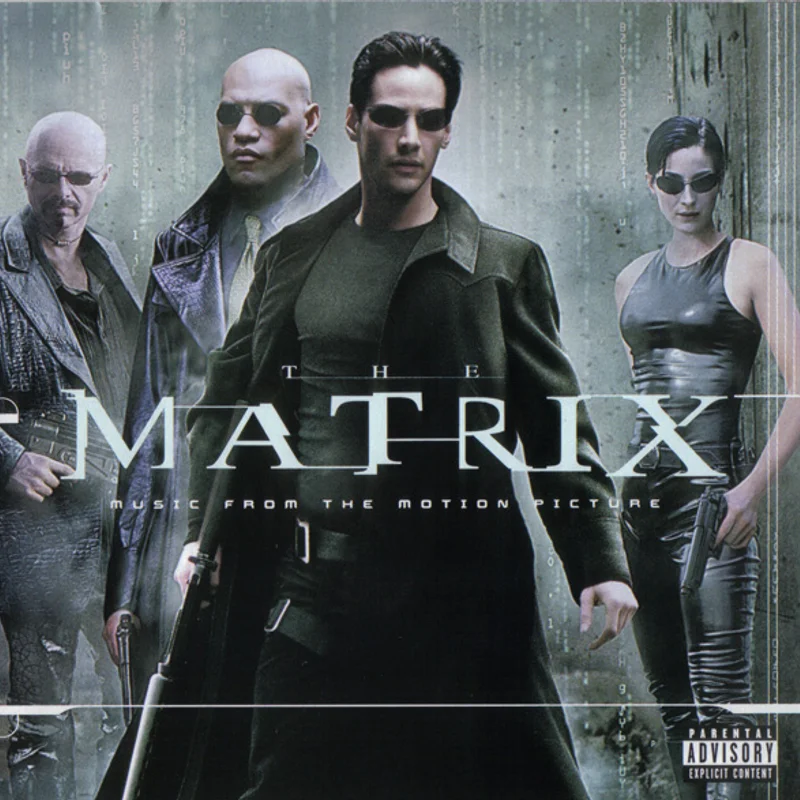
When the Wachowskis selected "Clubbed to Death" for a pivotal scene in 1999's "The Matrix" — the sequence in which Neo encounters the woman in the red dress during a training simulation — the song became permanently fused with the film's themes of simulated reality and awakening.
The Matrix soundtrack became a multi-platinum phenomenon, and Dougan's track was one of its emotional cornerstones, even though it had existed for years prior.
Critics hailed the piece as a landmark in the orchestral-electronic crossover space, and it became a touchstone for composers and producers seeking to bridge those worlds.
Despite its acclaim, the track never charted in a conventional pop sense, but its cultural penetration — through film, television, and word of mouth — far exceeded what any chart position could measure.
The full-length album "Furious Angels," finally released in 2002 after years of perfectionist delays, confirmed Dougan as a singular talent, but "Clubbed to Death" remained its gravitational center.
The track's legacy has only grown in the decades since: it has been licensed for countless films, advertisements, and video games; it has been sampled, remixed, and covered by artists across genres; and it remains a staple of "best instrumental tracks ever" lists.
More profoundly, it helped legitimize the idea that electronic music could be composed with the ambition and emotional depth of classical music — not as a novelty, but as a genuine artistic statement.
Rob Dougan, who has remained famously reclusive and released vanishingly little music since, crafted in "Clubbed to Death" a piece that transcends its era.
It is a track that sounds as devastating today as it did in 1995 — a dark, glittering monument to what happens when a singular vision is pursued without compromise.