SpiceUpYourLife-MurkHavanaFMRadioMix
Spice Girls, Oscar Gaeton, Murk
Too Much
Pop royalty meets Miami bass: a sun-drenched remix that rewired the Spice Girls for the dancefloor.
“Pop royalty meets Miami bass: a sun-drenched remix that rewired the Spice Girls for the dancefloor.”
By the autumn of 1997, the Spice Girls were not merely a pop group — they were a cultural weather system, reshaping the landscape of mainstream music with gale-force charisma.
"Spice Up Your Life," the lead single from their sophomore album *Spiceworld*, had already stormed charts worldwide with its samba-inflected, maximalist pop energy.
But behind the scenes, the label and the group's creative team understood that the song's DNA contained something deeper — a rhythmic pulse that, in the right hands, could be unspooled into something altogether more hypnotic.
Enter Murk, the legendary Miami house duo of Oscar Gaeton and Ralph Falcon, whose Havana FM Radio Mix would strip the track to its molten, instrumental core and reimagine it for an entirely different world.
The Murk remix was born in the humid, bass-heavy studios of South Florida, where Gaeton and Falcon had already established themselves as architects of a distinctly Latin-tinged deep house sound.
Their approach to the Spice Girls' source material was radical: rather than simply extending the original's pop hooks, they dissolved the vocal topline entirely, allowing the instrumental architecture to breathe and mutate.
The result is a track that lives at a patient, pulsing 120 BPM — a tempo that sits perfectly in the sweet spot between contemplative groove and dancefloor propulsion.
The key of C major lends the production an open, almost naive brightness, but Murk subvert that clarity with layers of filtered percussion, dubby delays, and a low-end warmth that evokes late-night Havana radio transmissions crackling through a car stereo.
With no lyrics to anchor the listener, the Havana FM Radio Mix becomes a study in texture and negative space.
The vocal absence is itself a statement — a deliberate erasure of pop's most recognizable commodity in favor of pure sonic atmosphere.
Where the original "Spice Up Your Life" was a manifesto of empowerment and hedonism, this remix transforms that energy into something more abstract: a feeling rather than a message, a mood rather than a slogan.
The emotional arc unfolds through the interplay of percussion and bass, rising and falling like a conversation conducted entirely in rhythm.
It is, in its own way, a meditation on what remains when you strip identity from a pop phenomenon — and what you find is a groove that is universal, borderless, and deeply physical.
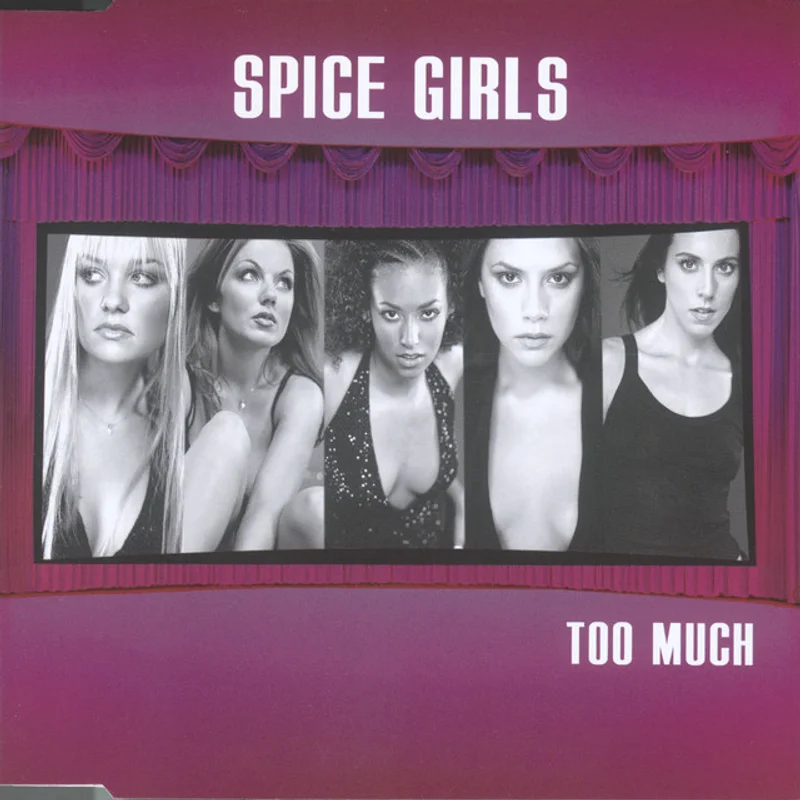
The release of the remix as part of the *Too Much* single package in late 1997 was a savvy commercial and artistic move.
"Too Much" itself reached number one in the UK and charted strongly across Europe, and the inclusion of Murk's rework signaled to the club community that the Spice Girls' orbit extended far beyond teen-pop.
For DJs and house music aficionados, the Havana FM Radio Mix was a revelation — proof that beneath the Union Jack dresses and platform sneakers lay source material robust enough to survive radical recontextualization.
Critics who had dismissed the group as a manufactured novelty were forced to reckon with the fact that their music, in the hands of skilled remixers, could hold its own in the most discerning DJ sets.
The remix received notable play in Miami's Winter Music Conference circles and became a quiet cult favorite in Latin house communities.
More than a quarter-century later, the Murk Havana FM Radio Mix of "Spice Up Your Life" endures as a fascinating artifact at the intersection of pop maximalism and underground club culture.
It stands as a testament to the remix as an art form — not mere decoration or promotional afterthought, but genuine creative reimagining.
In the broader arc of the Spice Girls' catalog, it represents a road not taken: a vision of the group's music as raw material for global dancefloor alchemy.
For Murk, it confirmed their ability to transform virtually any source into their signature sound — warm, Latin-inflected, and irresistibly groovy.
Today, as a new generation of producers mines the late-'90s for inspiration, this remix feels less like a period piece and more like a prophecy: a reminder that the wall between pop and underground has always been more porous than either side cares to admit.