LaMurga
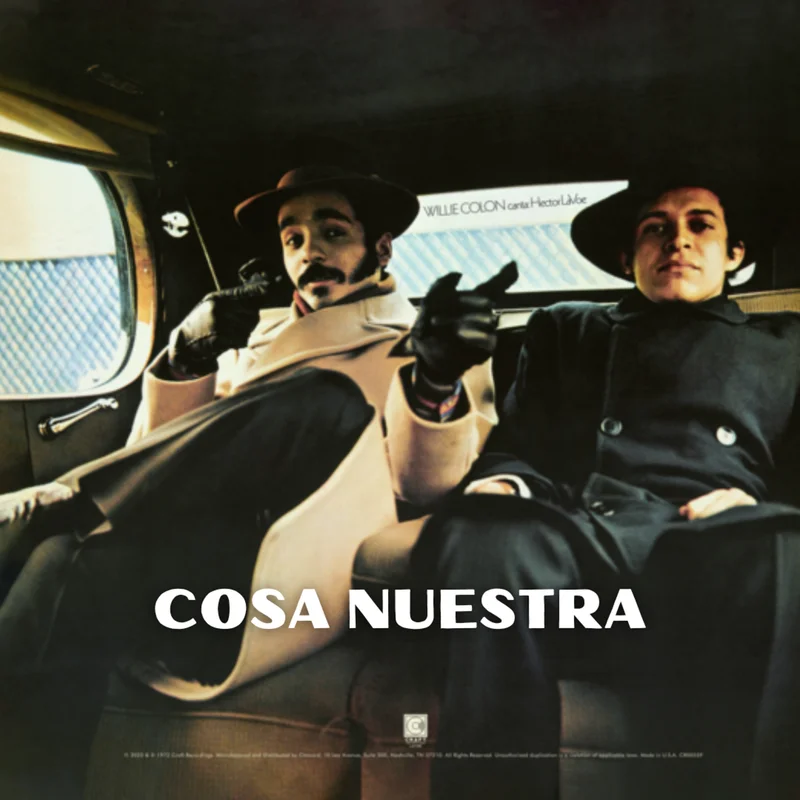
Willie Colón, Héctor Lavoe
Greatest Hits
A Bronx-born carnival anthem that turned the streets into a brass-fueled fiesta.
Vamos a bailar La Murga
La Murga de Panamá
esto es una cosa fácil
y muy buena pa'bailar.
Eh... Vamos a bailar La Murga
La Murga de Panamá
esto es una cosa fácil
y muy buena pa'bailar.
Ay tu tienes un caminao
que me tienes trastornao
y cuando bailas La Murga
oye mamita que buena estas.Esta es La Murga de Panamá.
Murga pa'quí, murga pa'llá
oye muchacha vamo'a bailar
esta es la murga de Panama
oye yo quiero bailar
Panama y Panama
Pana Pana Panama.
Murga pa'quí, murga pa'llá
esta es La Murga y que buena esta
ey chacuchucuchai chacuchucucha cha cha
que buena es la maraca en la Murga mamá.
Vamos a bailar La Murga
La Murga de Panamá
esto es una cosa fácil
y muy buena pa'bailar.
Eh... Vamos a bailar La Murga
La Murga de Panamá
esto es una cosa fácil
y muy buena pa'bailar.
Ay tu tienes un caminao
que me tienes trastornao
y cuando bailas La Murga
oye mamita que buena estas.Esta es La Murga de Panamá.
Murga pa'quí, murga pa'llá
oye muchacha vamo'a bailar
esta es la murga de Panama
oye yo quiero bailar
Panama y Panama
Pana Pana Panama.
Murga pa'quí, murga pa'llá
esta es La Murga y que buena esta
ey chacuchucuchai chacuchucucha cha cha
que buena es la maraca en la Murga mamá.
“A Bronx-born carnival anthem that turned the streets into a brass-fueled fiesta.”
By the early 1970s, Willie Colón and Héctor Lavoe had already established themselves as the most electrifying duo in the Fania Records universe.
Colón, still barely in his twenties, was a trombonist and arranger with a restless musical imagination, while Lavoe — born Héctor Juan Pérez Martínez in Ponce, Puerto Rico — possessed a voice that could pivot from honeyed tenderness to raw, barrio-hardened grit in a single phrase.
"La Murga" emerged from sessions steeped in the spirit of Latin carnival traditions, channeling the raucous energy of murga street bands — those riotous ensembles of brass, percussion, and collective euphoria that have animated carnivals from Montevideo to Cádiz to the neighborhoods of upper Manhattan.
Colón, ever the cultural alchemist, saw in the murga tradition a vehicle for something both joyful and subversive: a purely instrumental track that could communicate everything through rhythm and timbre alone.
Recorded at the modest but legendary studios that served as Fania's creative nerve center in New York City, "La Murga" is a masterclass in arrangement and groove.
Colón's trombone — that unmistakable, slightly gritty, gloriously unpolished horn that became his signature — leads the charge, weaving melodic lines over a rhythmic foundation that is at once disciplined and ecstatic.
The percussion section locks into a mid-tempo groove around 120 BPM, a deliberate choice that gives the track a swaggering, processional quality rather than the breakneck pace of a descarga.
Congas, timbales, and bongos interlock with mathematical precision while the piano montuno provides harmonic scaffolding in the bright, open landscape of C major.
The brass section swells and recedes like a crowd surging through narrow streets, and Colón's production strips away anything superfluous — there are no wasted notes here, only pure kinetic intention.
As a purely instrumental piece, "La Murga" speaks a language beyond lyrics, yet its emotional narrative is unmistakable.
The track unfolds like a story told in movement: an opening that beckons you into the procession, a middle section where the ensemble hits a euphoric plateau, and a finale that feels less like an ending than an invitation to loop back to the beginning and march again.
The absence of Lavoe's voice — remarkable given that he was one of the most charismatic vocalists in Latin music history — is itself a statement.
Colón understood that sometimes the instruments themselves carry the poetry, that rhythm and melody can articulate communal joy in ways that words might only constrain.
The track's emotional arc moves from anticipation to celebration to a kind of bittersweet resolution, mirroring the arc of carnival itself — that fleeting, sacred space where ordinary life is suspended.
Upon its release, "La Murga" became an instant staple in the Fania catalog and a perennial favorite on Latin radio and in dance halls across New York, San Juan, Bogotá, and beyond.
It solidified Colón's reputation not merely as a performer but as one of salsa's most inventive arrangers — a musician who could take folk traditions and reframe them through the lens of urban New York sophistication without ever losing their populist soul.
Critics praised the track for its infectious simplicity and its deceptive complexity; what sounded like a straightforward party anthem revealed, on closer listening, layers of rhythmic interplay and harmonic nuance that rewarded repeated engagement.
The song became a cornerstone of the "Greatest Hits" compilation, a testament to its enduring popularity across generations of listeners.
Decades later, "La Murga" remains a touchstone — not just for salsa aficionados but for anyone interested in the broader story of Latin music's migration, mutation, and triumph in the twentieth century.
It has been sampled, covered, and referenced by artists spanning genres from hip-hop to electronic music.
DJs still drop it to ignite dance floors from Brooklyn to Buenos Aires.
Its inclusion on the "Greatest Hits" collection ensures that new listeners continue to discover its irresistible pull.
In the arc of Colón and Lavoe's legendary partnership — a collaboration that would produce some of the most beloved recordings in Latin music history before being cut short by Lavoe's tragic struggles — "La Murga" stands as a monument to pure, uncomplicated joy: the sound of a community in motion, horns blazing, drums thundering, the streets alive with the ancient, unstoppable energy of carnival.