PedroNavaja
Willie Colón, Rubén Blades
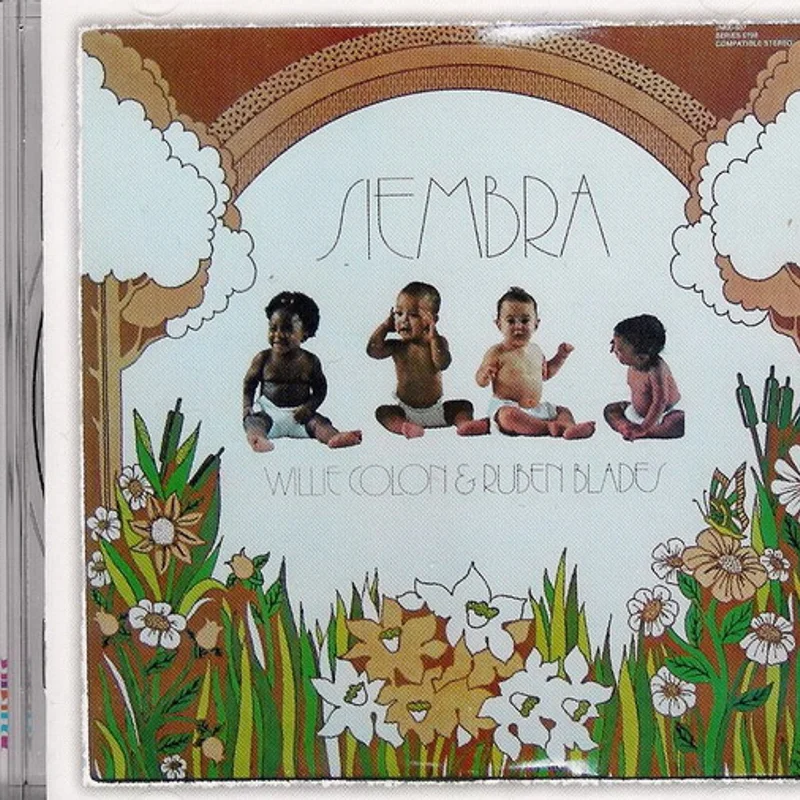
Siembra
A seven-minute salsa noir where the streets of New York become a Brechtian stage.
Por la esquina del viejo barrio lo vi pasar
Con el tumba'o que tienen los guapos al caminar
Las manos siempre en los bolsillos de su gabán
Pa' que no sepan en cuál de ellas lleva el puñal
Usa un sombrero de ala ancha, de medio la'o
Y zapatillas, por si hay problemas, salir vola'o
Lentes oscuros, pa' que no sepan qué está mirando
Y un diente de oro, que cuando ríe, se ve brillando
Como a tres cuadras de aquella esquina una mujer
Va recorriendo la acera entera por quinta vez
Y en un zaguán entra y se da un trago para olvidar
Que el día está flojo y no hay clientes pa' trabajar
Un carro pasa muy despacito por la avenida
No tiene marcas, pero to'os saben que's policía
Pedro Navaja, las manos siempre dentro 'el gabán
Mira y sonríe y el diente de oro vuelve a brillar
Mientras camina, pasa la vista de esquina a esquina
No se ve un alma, está desierta to'a la avenida
Cuando de pronto esa mujer sale del zaguán
Y Pedro Navaja aprieta un puño dentro 'el gabán
Mira pa' un lado, mira pa'l otro y no ve a nadie
Y a la carrera, pero sin ruido, cruza la calle
Y mientras tanto, en la otra acera, va esa mujer
Refunfuñando, pues no hizo pesos con qué comer
Mientras camina, del viejo abrigo saca un revólver, esa mujer
Iba a guardarlo en su cartera pa' que no estorbe
Un 38, Smith & Wesson, del especial
Que carga encima pa' que la libre de todo mal
Y Pedro Navaja, puñal en mano, le fue pa' encima
El diente de oro iba alumbrando to'a la avenida ¡Hizo fácil!
Mientras reía, el puñal le hundía sin compasión
Cuando de pronto sonó un disparo como un cañón
Y Pedro Navaja cayó en la acera mientras veía a esa mujer
Que revólver en mano y de muerte herida ahí le decía
Yo qué pensaba, "hoy no es mi día, estoy sala'
Pero Pedro Navaja, tú estás peor, no estás en na'"
Y créanme gente, que aunque hubo ruido, nadie salió
No hubo curiosos, no hubo preguntas, nadie lloró
Solo un borracho con los dos cuerpos se tropezó
Cogió el revolver, el puñal, los pesos y se marchó
Y tropezando se fue cantando desafina'o
El coro que aquí les traje y da el mensaje de mi canción
"La vida te da sorpresas, sorpresas te da la vida, ay, Dios"
(La vida te da sorpresas, sorpresas te da la vida, ay, Dios)
Pedro Navaja, matón de esquina
Quien a hierro mata, a hierro termina
(La vida te da sorpresas, sorpresas te da la vida, ay, Dios)
Valiente pescador, al anzuelo que tiraste
En vez de una sardina, un tiburón enganchaste
(I like to live in America)
(La vida te da sorpresas, sorpresas te da la vida, ay, Dios)
Ocho millones de historias tiene la ciudad de Nueva York
(La vida te da sorpresas, sorpresas te da la vida, ay, Dios)
Como decía mi abuelita, el que de último ríe, se ríe mejor
(I like to live in America)
(La vida te da sorpresas, sorpresas te da la vida, ay, Dios)
Cuando lo manda el destino no lo cambia ni el más bravo
Si naciste pa' martillo, del cielo te caen los clavos
(La vida te da sorpresas, sorpresas te da la vida, ay, Dios)
En barrio de guapos, cuida'o en la acera
Cuida'o camará', que el que no corre, vuela
(La vida te da sorpresas, sorpresas te da la vida, ay, Dios)
Como en una novela de Kafka, el borracho dobló por el callejón
(La vida te da)
En la ciudad de Nueva York
Dos personas fueron encontradas muertas
Esta madrugada los cuerpos sin vida
De Pedro Barrios y Josefina Wilson
Por la esquina del viejo barrio lo vi pasar
Con el tumba'o que tienen los guapos al caminar
Las manos siempre en los bolsillos de su gabán
Pa' que no sepan en cuál de ellas lleva el puñal
Usa un sombrero de ala ancha, de medio la'o
Y zapatillas, por si hay problemas, salir vola'o
Lentes oscuros, pa' que no sepan qué está mirando
Y un diente de oro, que cuando ríe, se ve brillando
Como a tres cuadras de aquella esquina una mujer
Va recorriendo la acera entera por quinta vez
Y en un zaguán entra y se da un trago para olvidar
Que el día está flojo y no hay clientes pa' trabajar
Un carro pasa muy despacito por la avenida
No tiene marcas, pero to'os saben que's policía
Pedro Navaja, las manos siempre dentro 'el gabán
Mira y sonríe y el diente de oro vuelve a brillar
Mientras camina, pasa la vista de esquina a esquina
No se ve un alma, está desierta to'a la avenida
Cuando de pronto esa mujer sale del zaguán
Y Pedro Navaja aprieta un puño dentro 'el gabán
Mira pa' un lado, mira pa'l otro y no ve a nadie
Y a la carrera, pero sin ruido, cruza la calle
Y mientras tanto, en la otra acera, va esa mujer
Refunfuñando, pues no hizo pesos con qué comer
Mientras camina, del viejo abrigo saca un revólver, esa mujer
Iba a guardarlo en su cartera pa' que no estorbe
Un 38, Smith & Wesson, del especial
Que carga encima pa' que la libre de todo mal
Y Pedro Navaja, puñal en mano, le fue pa' encima
El diente de oro iba alumbrando to'a la avenida ¡Hizo fácil!
Mientras reía, el puñal le hundía sin compasión
Cuando de pronto sonó un disparo como un cañón
Y Pedro Navaja cayó en la acera mientras veía a esa mujer
Que revólver en mano y de muerte herida ahí le decía
Yo qué pensaba, "hoy no es mi día, estoy sala'
Pero Pedro Navaja, tú estás peor, no estás en na'"
Y créanme gente, que aunque hubo ruido, nadie salió
No hubo curiosos, no hubo preguntas, nadie lloró
Solo un borracho con los dos cuerpos se tropezó
Cogió el revolver, el puñal, los pesos y se marchó
Y tropezando se fue cantando desafina'o
El coro que aquí les traje y da el mensaje de mi canción
"La vida te da sorpresas, sorpresas te da la vida, ay, Dios"
(La vida te da sorpresas, sorpresas te da la vida, ay, Dios)
Pedro Navaja, matón de esquina
Quien a hierro mata, a hierro termina
(La vida te da sorpresas, sorpresas te da la vida, ay, Dios)
Valiente pescador, al anzuelo que tiraste
En vez de una sardina, un tiburón enganchaste
(I like to live in America)
(La vida te da sorpresas, sorpresas te da la vida, ay, Dios)
Ocho millones de historias tiene la ciudad de Nueva York
(La vida te da sorpresas, sorpresas te da la vida, ay, Dios)
Como decía mi abuelita, el que de último ríe, se ríe mejor
(I like to live in America)
(La vida te da sorpresas, sorpresas te da la vida, ay, Dios)
Cuando lo manda el destino no lo cambia ni el más bravo
Si naciste pa' martillo, del cielo te caen los clavos
(La vida te da sorpresas, sorpresas te da la vida, ay, Dios)
En barrio de guapos, cuida'o en la acera
Cuida'o camará', que el que no corre, vuela
(La vida te da sorpresas, sorpresas te da la vida, ay, Dios)
Como en una novela de Kafka, el borracho dobló por el callejón
(La vida te da)
En la ciudad de Nueva York
Dos personas fueron encontradas muertas
Esta madrugada los cuerpos sin vida
De Pedro Barrios y Josefina Wilson
“A seven-minute salsa noir where the streets of New York become a Brechtian stage.”
In the spring of 1978, Rubén Blades was a Harvard Law School hopeful working in the mailroom at Fania Records, the legendary label that had turned salsa into a global phenomenon.
Willie Colón, already a superstar trombonist and bandleader who had been recording since he was seventeen, was looking for a new creative partner after his iconic run with Héctor Lavoe.
The two had collaborated before — Blades sang on Colón's 'Metiendo Mano!' in 1977 — but for their next album they wanted to do something seismic.
Blades arrived at the sessions for what would become 'Siembra' with a seven-minute narrative song inspired by Bertolt Brecht and Kurt Weill's 'Die Moritat von Mackie Messer' — better known to English speakers as 'Mack the Knife' — transplanted from Victorian London to the neon-lit, rain-slicked sidewalks of Latino New York.
The song was 'Pedro Navaja,' and nothing in salsa would ever be quite the same.
Recorded at Good Vibrations Studios in New York City and produced by Willie Colón himself, the track is a masterclass in cinematic arrangement within the salsa format.
The song opens with a lone trombone figure — Colón's unmistakable brassy growl — that immediately evokes the menace of a deserted urban avenue at two in the morning.
At 134 BPM in the key of G major, the groove is deceptively buoyant; the congas, timbales, and bongos lock into a relentless, swinging tumbao that propels the narrative forward like a tracking shot through a barrio.
The piano montuno, played with crystalline precision, weaves between the horns, while the bass anchors every scene change with a pulse that feels like a heartbeat quickening.
What is remarkable is how Colón and Blades use the conventions of salsa — the call-and-response coro, the soneo improvisations, the brass fanfares — not as decoration but as dramatic machinery.
The energy reads at 0.76 and the valence at 0.74, numbers that capture the paradox at the song's heart: this is joyous, danceable music telling a story of murder, irony, and cosmic indifference.
Lyrically, 'Pedro Navaja' is a short film compressed into verse, a naturalistic urban fable told with the precision of a crime novelist and the moral weight of a folk parable.
Blades sketches his antihero with swift, visual strokes — the wide-brimmed hat tilted to one side, the dark glasses, the gold tooth that gleams when he grins, the sneakers worn for a quick escape.
Across the avenue, a sex worker paces the same block for the fifth time, ducking into a doorway for a drink to forget a slow night.
When Pedro crosses the street to rob her, knife in hand, he doesn't know she carries a .38 Smith & Wesson Special in her coat.
He stabs her; she shoots him.
Both die on the pavement.
The genius is in the aftermath: nobody comes out, nobody asks questions, nobody cries.
A drunk stumbles over the bodies, pockets the gun, the knife, and the money, and wanders off singing the song's own chorus — 'La vida te da sorpresas, sorpresas te da la vida.' It is a closed loop of irony worthy of O.
Henry, wrapped in the fatalism of García Márquez and the social critique of Brecht.
The final spoken-word coda, delivered like a news bulletin — 'the lifeless bodies of Pedro Barrios and Josefina Wilson' — strips the characters of their mythic names and returns them to the anonymity of a police blotter, one more statistic in a city of eight million stories.
The cultural impact of 'Pedro Navaja' and its parent album 'Siembra' was nothing short of revolutionary.
Released in 1978 on Fania Records, 'Siembra' became the best-selling salsa album in history, moving over five million copies worldwide and holding that record for decades.
'Pedro Navaja' became an anthem across Latin America, the Caribbean, and Latino communities in the United States — a song that transcended the dance floor to become a piece of shared literary heritage.
It proved that salsa could be a vehicle for sophisticated storytelling and social commentary without sacrificing a single ounce of rhythmic power.
Critics hailed it as the moment salsa grew up, the bridge between the genre's street-party origins and the intellectual ambitions of what would come to be called salsa consciente.
The song charted across the Spanish-speaking world and became a permanent fixture on Latin radio, in jukeboxes from San Juan to Bogotá, and at every salsa concert where Blades or Colón appeared.
More than four decades later, 'Pedro Navaja' endures as one of the most important songs in the history of Latin music — a track that expanded the boundaries of what popular music in Spanish could achieve narratively, politically, and artistically.
It spawned a sequel ('Sorpresas'), a feature film, a stage musical, and countless covers and references across genres.
For Rubén Blades, it was the cornerstone of a career that would see him become a Panama presidential candidate, a Harvard Law graduate, an actor, and the conscience of Latin American popular music.
For Willie Colón, it confirmed his status as salsa's most daring architect, a producer and musician willing to bend the genre until it contained multitudes.
Together, on this single track, they created something that functions simultaneously as a dance record, a short story, a social document, and a philosophical meditation on fate.
Press the needle into the groove, and the trombone begins its prowl down that empty avenue — and forty-six years later, the city still has eight million stories, and this one still cuts the deepest.